
📑 Table of Contents ▶
- Exploring Thai Fish Curry with Coconut Milk
- Fundamentals
- Preparation/setup
- Directions
- Mastering Thai Fish Curry Techniques
- Technique
- Tips/tricks
- Perfecting Your Thai Fish Curry
- Perfecting results
- Troubleshooting/variations
- Serving Your Thai Fish Curry
- Serving/presentation
- Pairings/storage
- More recipes you may like
Living in a bustling city, I often seek solace in my kitchen. One dish that transports me to a tropical paradise is Thai fish curry with coconut milk. The vibrant flavors and fragrant aroma captivate my senses, making the dinner prep feel more like a culinary escape than a chore.
The first time I cooked this dish, I had a craving for something bright and comforting. With fresh fish fillets and seasonal veggies on hand, I felt inspired. I still remember the rich scent of coconut milk mingling with the spicy red curry paste as it simmered away on the stovetop. In just a short time, I had a beautiful curry that satisfied both my hunger and my soul.
Whenever I feel overwhelmed, creating this Thai fish curry is my go-to remedy. It’s not just the taste that delights me, but also the joy of sharing it with family and friends. Embracing the warm, inviting flavor of seafood paired with creamy coconut milk always brings smiles around the dinner table.
Follow along as we dive into the delightful world of this dish, exploring not just the flavors but also the magic behind Thai fish curry with coconut milk.
Exploring Thai Fish Curry with Coconut Milk
Fundamentals
Creating a stellar Thai fish curry relies on a few fundamental elements. Start with high-quality fish fillets, such as cod or tilapia. The choice of fish influences the overall taste, so opt for fresh, sustainable options.
Coconut milk forms the heart of this dish, infusing it with creaminess and a tropical flavor that balances the curry’s heat. The red curry paste packs a punch, offering complex flavors that are essential to this recipe.
Mixed seasonal vegetables contribute not only nutritional value but also texture to your curry. Utilizing a mix of bell peppers, zucchini, and snap peas allows for a colorful presentation, completing the beautiful aesthetic of the dish.
Preparation/setup
Before you start cooking, gather all your ingredients to streamline the process. Chop the vegetables into bite-sized pieces and ensure your fish fillets are thawed and ready to be added to the pot. Measure out the coconut milk, red curry paste, fish sauce, and lime juice in advance.
Prepare your skillet by heating a bit of oil over medium heat. This initial setup makes the cooking process efficient and enjoyable. The smell of sautéing curry paste is an invitation to adventure, guiding you toward a delicious destination.
Ingredients
- 1 lb fish fillets (such as cod or tilapia)
- 1 can coconut milk
- 1 tablespoon red curry paste
- 2 cups mixed seasonal vegetables (bell peppers, zucchini, snap peas, etc.)
- 1 tablespoon fish sauce
- 1 tablespoon lime juice
- Fresh basil or cilantro for garnish
- Salt and pepper to taste
- Coconut rice or cauliflower rice for serving
Directions
- In a large skillet, heat a bit of oil over medium heat. Add the red curry paste and sauté for 1-2 minutes until fragrant.
- Pour in the coconut milk and stir to combine.
- Add the mixed vegetables and cook for about 5-7 minutes until they start to soften.
- Add the fish fillets and gently simmer for about 10 minutes, or until the fish is cooked through.
- Stir in the fish sauce, lime juice, and season with salt and pepper to taste.
- Serve the curry over coconut rice or cauliflower rice, and garnish with fresh basil or cilantro.
Mastering Thai Fish Curry Techniques
Technique
Cooking Thai fish curry requires a delicate balance. Begin by sautéing the red curry paste to awaken its flavors. This crucial step ensures the spices bloom and infuse the dish with their full potential.
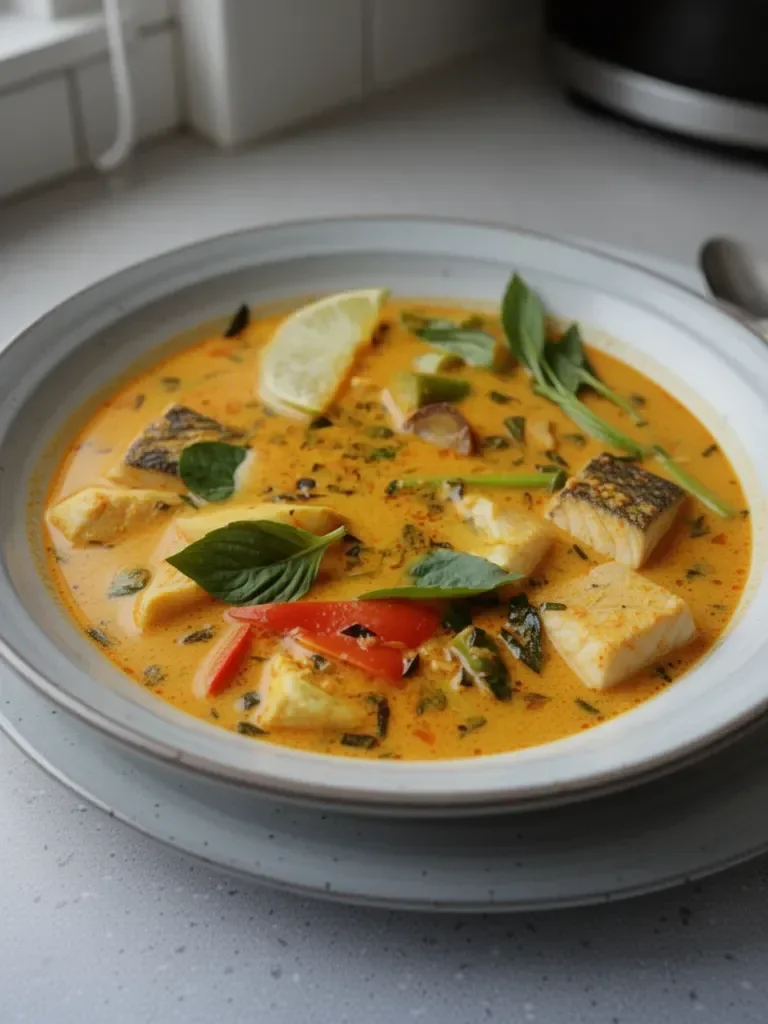
When adding the coconut milk, stir gently to combine. This enhances the creaminess of the curry and helps achieve a smooth consistency. As the mixed vegetables join the mix, keep an eye on their texture. You want them tender yet still crisp, providing a delightful crunch in every bite.
The final step involves simmering the fish fillets. Be gentle here—overcooking can lead to dry fish. Aim for perfectly tender fillets that flake easily, contributing to the curry’s overall allure.
Tips/tricks
Incorporating a splash of lime juice toward the end brightens the entire dish. It works harmoniously with the coconut milk, balancing the richness with zesty freshness.
Adjust the amount of red curry paste based on your heat preferences. If you crave more spice, feel free to add extra paste. On the other hand, if mild is your style, start small and adjust as you go.
Garnishing with fresh herbs, such as basil or cilantro, elevates the presentation and adds a burst of flavor. Don’t skip this step—it transforms your dish into a showstopper.
Perfecting Your Thai Fish Curry
Perfecting results
Quality fish makes a difference in this dish. Fresh fillets ensure a flaky, tender bite that complements the creamy coconut. Always choose sustainable seafood options for the best results.
Using seasonal vegetables not only enhances the dish visually but also retains nutrients, making every spoonful a wholesome delight. Experiment with the temperatures by adjusting cooking times, ensuring everything retains its original characteristic.
Feel free to serve this curry with coconut rice or cauliflower rice. Both offer a unique base for the curry and can adapt to different dietary choices.
Troubleshooting/variations
If your curry turns out too thick, simply add a bit of water or additional coconut milk to reach your desired consistency. Conversely, if it’s too watery, let it simmer longer to reduce.
Feeling adventurous? Consider adding other vegetables like carrots or sweet potatoes for added flavor. If you prefer more protein, tofu or shrimp could be delicious options that work well with the existing ingredients.
Serving Your Thai Fish Curry
Serving/presentation
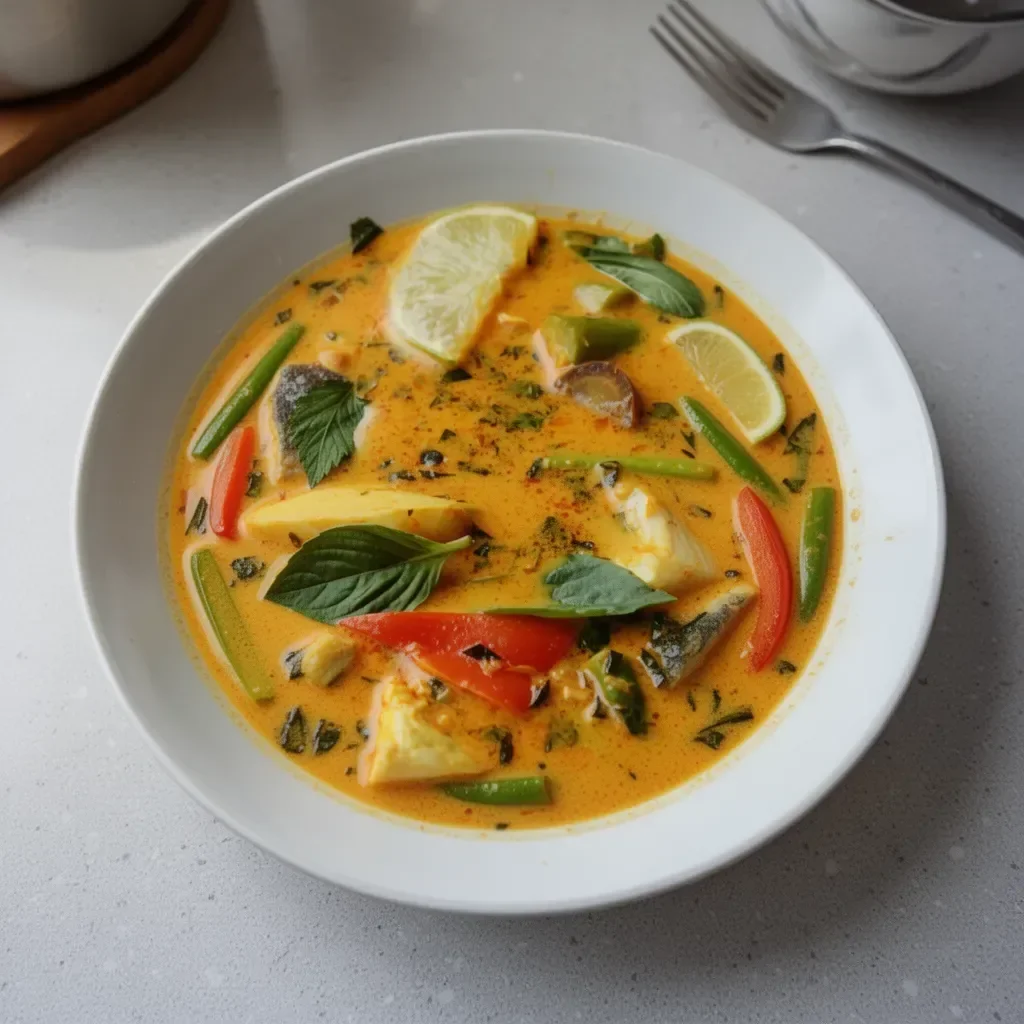
Presentation plays a significant role in enhancing your cooking experience. Ladle the Thai fish curry over a bed of rice, whether coconut or cauliflower. The colors of the vibrant vegetables and creamy sauce should catch the eye of anyone at the table.
Garnish with fresh basil or cilantro before serving. A few cilantro leaves atop the dish not only look appealing but also bring an aromatic finish. Consider adding lime wedges alongside for guests who like that extra zing.
Pairings/storage
Pair this Thai fish curry with a light salad or steamed rice for a balanced meal. Its creamy depth complements crunchy sides beautifully. For leftovers, store the curry in an airtight container in the refrigerator for up to three days.
Reheat gently to preserve the delicate fish texture. Enjoy your leftover curry in a new way by serving it in lettuce wraps or as a filling for tacos, allowing for creative repurposing of your meal.
Thai fish curry with coconut milk becomes a cherished staple in your cooking repertoire. This dish not only satisfies cravings but also fosters connections around the dining table. The harmonious blend of fresh flavors and aromatic spices invites joyful cooking and delightful dining experiences.
Print
Thai Fish Curry with Coconut Milk
- Prep Time: 10 minutes
- Cook Time: 20 minutes
- Total Time: 30 minutes
- Yield: 4 servings
- Category: Main Course
- Method: Stovetop
- Cuisine: Thai
- Diet: Seafood
Description
A vibrant and fragrant Thai fish curry made with coconut milk, fresh fish, and seasonal vegetables, perfect for a comforting meal.
Ingredients
- 1 lb fish fillets (such as cod or tilapia)
- 1 can coconut milk
- 1 tablespoon red curry paste
- 2 cups mixed seasonal vegetables (bell peppers, zucchini, snap peas, etc.)
- 1 tablespoon fish sauce
- 1 tablespoon lime juice
- Fresh basil or cilantro for garnish
- Salt and pepper to taste
- Coconut rice or cauliflower rice for serving
Instructions
- Heat a bit of oil in a large skillet over medium heat. Add the red curry paste and sauté for 1-2 minutes until fragrant.
- Pour in the coconut milk and stir to combine.
- Add the mixed vegetables and cook for about 5-7 minutes until they start to soften.
- Add the fish fillets and gently simmer for about 10 minutes, or until the fish is cooked through.
- Stir in the fish sauce, lime juice, and season with salt and pepper to taste.
- Serve the curry over coconut rice or cauliflower rice, and garnish with fresh basil or cilantro.
Notes
For a zingy twist, serve with lime wedges on the side. Adjust the heat level by modifying the amount of red curry paste.