
📑 Table of Contents ▶
- Thai Coconut Sago Pudding Essentials
- Fundamentals
- Preparation/setup
- Directions
- Creating Your Thai Coconut Sago Pudding
- Technique
- Tips/tricks
- Perfecting Your Thai Coconut Sago Pudding
- Perfecting results
- Troubleshooting/variations
- Serving and Storing Your Thai Coconut Sago Pudding
- Serving/presentation
- Pairings/storage
- More recipes you may like
Exploring the world of desserts often leads to delightful discoveries that transport us to distant cultures. One of my fondest memories comes from a small Thai café where I first tasted Thai Coconut Sago Pudding. The sweet aroma of coconut and the chewy texture of sago pearls captivated my senses. Each spoonful took me back to that cozy day, as I savored the creamy pudding, topped with fresh coconut flesh.
Finding a dessert that perfectly balances sweetness and texture can be challenging. This Thai Coconut Sago Pudding combines sago pearls with a rich coconut milk sauce, resulting in a treat that pleases the palate. The optional addition of young coconut flesh adds an extra layer of flavor. Creating this dish at home involves simple ingredients and easy steps, making it accessible for everyone.
As I began recreating this dish, I realized how every ingredient matters, especially the coconut flavors that define this pudding. The sago pearls become translucent and chewy, soaking up the delicious coconut mixture, while the optional pandan leaves infuse an aromatic touch. This dish is not just a dessert; it’s an adventure in flavor and texture that leaves a lasting impression.
Thai Coconut Sago Pudding Essentials
Fundamentals
With just a handful of ingredients, making Thai Coconut Sago Pudding feels like an art form. The main players in this dessert are sago pearls and a delightful coconut mixture. Understanding the ingredients’ role provides clarity and confidence in the kitchen. The sago pearls offer that signature chewy texture, while the coconut milk and water create a sweet, creamy base.
When preparing, pay close attention to the cooking times. Sago pearls require careful monitoring to reach the perfect translucency. All ingredients should blend seamlessly to create the rich flavor profile typical of Thai desserts. The preparation step is crucial, as the balance of sweetness and creaminess is what makes this pudding a standout.
Preparation/setup
Preparation for Thai Coconut Sago Pudding begins with gathering all the ingredients. You will need 1/4 cup of sago pearls, 2 cups of water, ½ cup of coconut milk, 1/4 cup of coconut water, 2 tablespoons of sugar, and 1/8 teaspoon of salt. The optional ingredients include young coconut flesh and a pandan leaf tied in a knot for added aroma.
Start by carefully opening the young coconut to collect the coconut water and scoop out the soft flesh. Setting the flesh aside will allow it to shine as a topping later. Meanwhile, warm the water in a pot and prepare the other ingredients, ensuring you keep everything organized for smooth cooking.
Ingredients
- 1/4 cup sago pearls (or tapioca pearls)
- 2 cups water
- ½ cup coconut milk
- 1/4 cup coconut water
- 2 tbsp sugar
- 1/8 tsp salt
- Young coconut flesh (optional, to taste)
- 1 pandan leaf (optional, tied in a knot)
Directions
- Carefully open the young coconut with a cleaver to collect the coconut water and scoop out the soft flesh. Set the flesh aside.
- In a pot over medium heat, bring the water to a gentle boil. Add the sago pearls and cook until translucent, about 10–15 minutes, stirring regularly. Cover and let rest for 10 minutes.
- Meanwhile, combine the coconut milk, coconut water, sugar, and salt in a small pot over medium heat. If using, add the pandan leaf. Warm gently for about 5 minutes, stirring regularly until fragrant.
- Drain the sago pearls and rinse under cold water to remove excess starch.
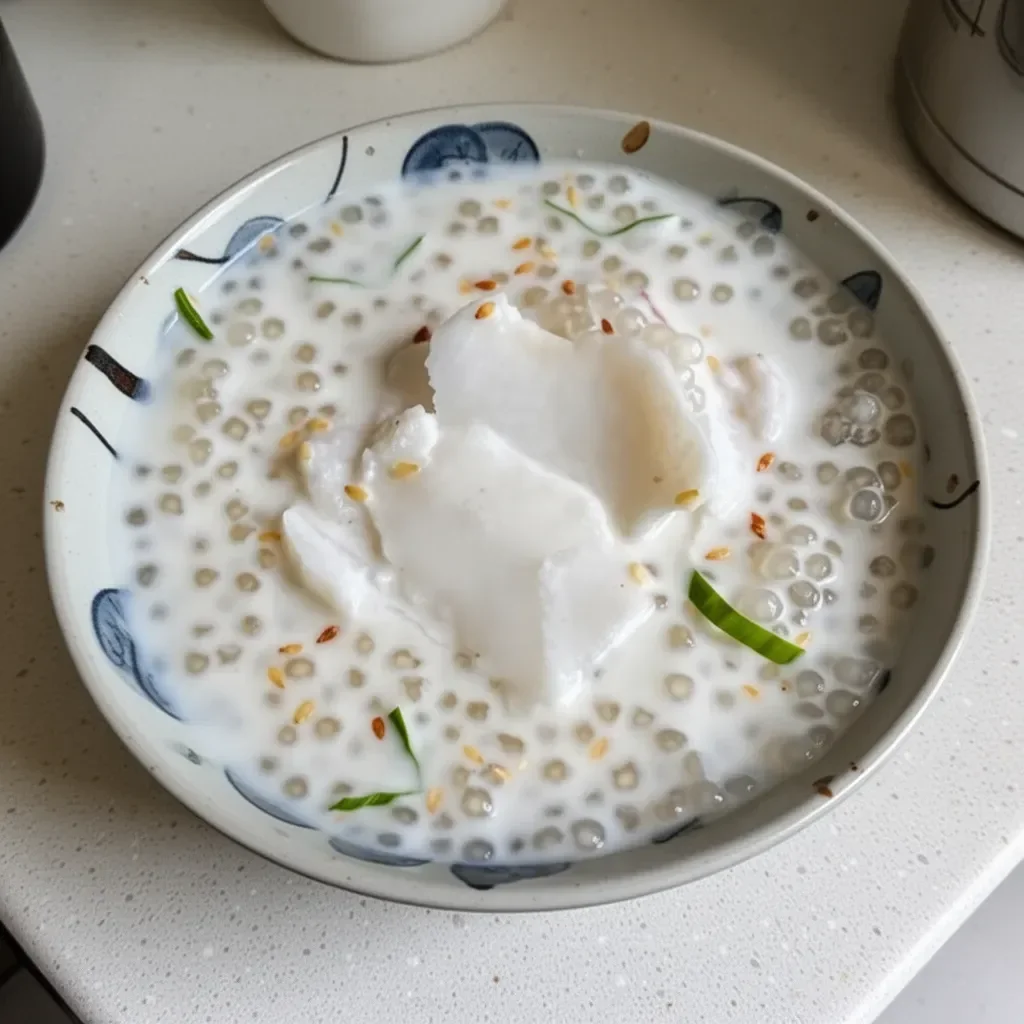
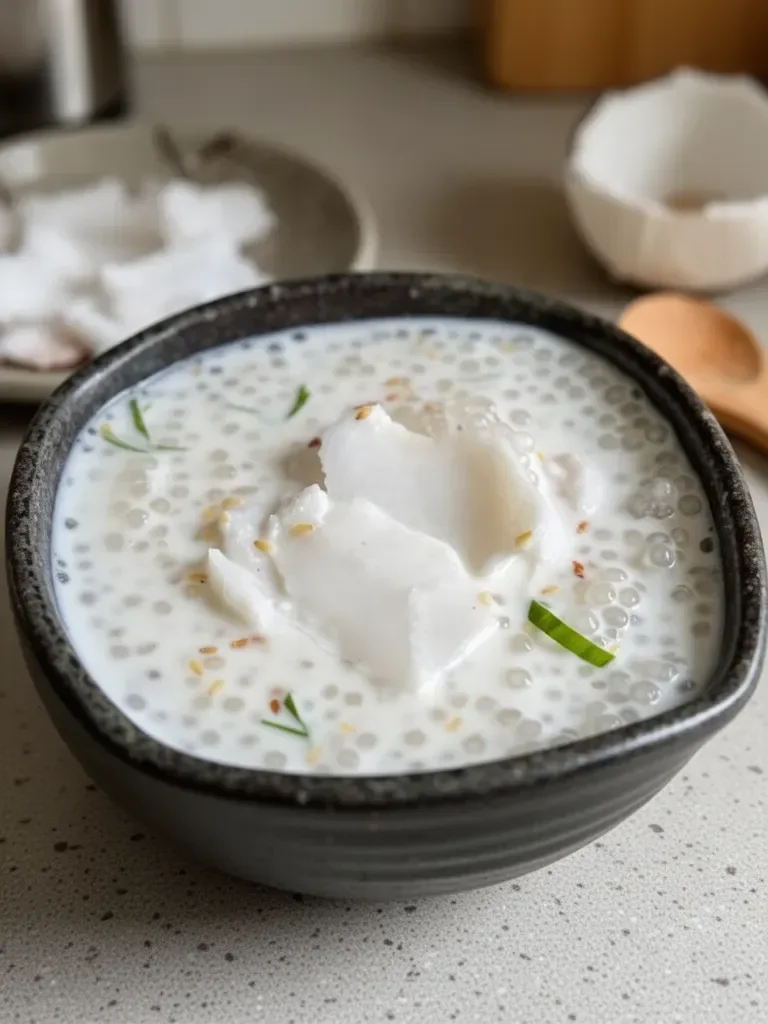
- Transfer the sago pearls to a serving bowl. Pour over the coconut milk mixture. Top with young coconut flesh and optional sesame seeds if desired.
Creating Your Thai Coconut Sago Pudding
Technique
Mastering the technique for Thai Coconut Sago Pudding lies in controlling the cooking process. Begin by boiling the water before adding the sago pearls. Stirring regularly prevents them from clumping together and ensures even cooking. After they reach the desired translucency, allow them to rest covered, which helps the pearls become fully tender.
When warming the coconut mixture, avoid boiling. Gentle heating allows the flavors to meld without curdling the coconut milk. Using a pandan leaf is optional, but it significantly enhances the dish’s aroma, adding that authentic Thai essence.
Tips/tricks
For those new to working with sago pearls, patience is key. Cook them until they achieve a soft, chewy texture. If they are undercooked, they will remain hard in the center. Rinsing the pearls after cooking is essential for removing excess starch; this ensures a cleaner presentation and texture.
Creating texture contrasts in your pudding is also possible. By incorporating fresh young coconut flesh, you introduce a delightful crunch that complements the chewiness of the sago. Additionally, topping with sesame seeds adds a nutty flavor while enhancing the visual appeal.
Perfecting Your Thai Coconut Sago Pudding
Perfecting results
Achieving the ideal consistency for Thai Coconut Sago Pudding may require some adjustments based on personal preferences. If you desire a creamier texture, consider adding more coconut milk. For a sweeter profile, adjust the sugar to your taste, keeping in mind that the sweetness of young coconut flesh may also influence the overall flavor.
Experimenting with texture can lead to unique variations. For example, if you prefer a thicker pudding, you may want to increase the sago portion. Alternatively, a more broth-like version can use less sago and enjoy the pudding as a light dessert.
Troubleshooting/variations
If the sago pearls do not become translucent, you may need to extend the cooking time. Ensure that the boiling water’s temperature stays consistent throughout the cooking process. If you find the mixture too thick after pouring the coconut sauce, simply mix in a little more coconut water to achieve the desired consistency.
For variations, consider infusing different flavors by adding a pinch of vanilla extract or a few drops of almond extract. Such twists can give your Thai Coconut Sago Pudding a personal touch while keeping the integrity of the dish intact.
Serving and Storing Your Thai Coconut Sago Pudding
Serving/presentation
Serving Thai Coconut Sago Pudding can become a creative endeavor. Present it in small clear cups or bowls to showcase the beautiful layering of sago pearls and creamy coconut sauce. Topping with freshly shredded young coconut flesh creates a visually appealing dish that invites enjoyment.
Consider garnishing with vibrant toppings like mint leaves for a splash of color. This dessert shines as a standalone indulgence, but it can also complement a tropical-themed meal or a gathering with friends.
Pairings/storage
Thai Coconut Sago Pudding pairs beautifully with a variety of light tropical fruits. Fresh mango or papaya can enhance the experience, adding freshness to each bite. Alternatively, serving the pudding with a scoop of ice cream or a dollop of whipped coconut cream offers additional indulgence without overwhelming the dessert’s delightful flavors.
Store any leftovers in an airtight container in the refrigerator. Enjoy the pudding within a couple of days to maintain its freshness and texture. Reheating is not necessary; instead, enjoy it chilled for a refreshing treat.
Drawing inspiration from the world of Thai desserts illuminates the fun of cooking. Creating Thai Coconut Sago Pudding captures the essence of coconut, simplicity, and texture. Each step of the process, from selecting the ingredients to the final presentation, warrants appreciation. Celebrate this delicious dish as a wonderful way to share flavors and create beautiful memories with family and friends.
Print
Thai Coconut Sago Pudding
- Prep Time: 15 minutes
- Cook Time: 30 minutes
- Total Time: 45 minutes
- Yield: 4 servings
- Category: Dessert
- Method: Boiling
- Cuisine: Thai
- Diet: Vegetarian
Description
A delightful Thai dessert made with chewy sago pearls and a rich coconut milk sauce, perfect for any occasion.
Ingredients
- 1/4 cup sago pearls (or tapioca pearls)
- 2 cups water
- ½ cup coconut milk
- 1/4 cup coconut water
- 2 tbsp sugar
- 1/8 tsp salt
- Young coconut flesh (optional, to taste)
- 1 pandan leaf (optional, tied in a knot)
Instructions
- Carefully open the young coconut with a cleaver to collect the coconut water and scoop out the soft flesh. Set the flesh aside.
- In a pot over medium heat, bring the water to a gentle boil. Add the sago pearls and cook until translucent, about 10–15 minutes, stirring regularly. Cover and let rest for 10 minutes.
- Meanwhile, combine the coconut milk, coconut water, sugar, and salt in a small pot over medium heat. If using, add the pandan leaf. Warm gently for about 5 minutes, stirring regularly until fragrant.
- Drain the sago pearls and rinse under cold water to remove excess starch.
- Transfer the sago pearls to a serving bowl. Pour over the coconut milk mixture. Top with young coconut flesh and optional sesame seeds if desired.
Notes
For a creamier texture, add more coconut milk. Adjust sugar to taste, especially considering the sweetness of young coconut flesh.