
📑 Table of Contents ▶
- Vietnamese Honeycomb Cake: A Delightful Treat
- Fundamentals
- Preparation/setup
- Directions
- Crafting the Perfect Vietnamese Honeycomb Cake
- Technique
- Tips/tricks
- Perfecting Your Vietnamese Honeycomb Cake
- Perfecting results
- Troubleshooting/variations
- Serving and Storing the Vietnamese Honeycomb Cake
- Serving/presentation
- Pairings/storage
- Conclusion
- Vietnamese Honeycomb Cake
- More recipes you may like
Through the years, certain recipes become more than just food; they turn into cherished memories. I recall the first time I tasted Vietnamese honeycomb cake, a delightful treat that captured my heart. The soft, pillowy texture and subtle notes of pandan transported me back to happy family gatherings. This cake symbolizes warmth and togetherness, drawing people closer with each bite.
The ingredients create a symphony of flavors that dance on your palate. Full-fat coconut milk brings richness, while the pandan leaves add a unique aroma and taste. Each ingredient plays a vital role in crafting this irresistible Vietnamese honeycomb cake. With its enchanting texture and flavors, it’s a dish that’s hard to forget.
Baking this cake isn’t just about the end result; it’s about the journey of making it. The whisking, mixing, and pouring are meditative, transforming simple ingredients into something spectacular. This cake stands tall on a dessert table, inviting everyone to partake in its deliciousness.
Now, let’s dive into the recipe and discover how you can create this extraordinary cake in your own kitchen.
Vietnamese Honeycomb Cake: A Delightful Treat
Fundamentals
Vietnamese honeycomb cake, or "bánh tổ," showcases rich flavors and unique textures resulting from thoughtful ingredient choices. At its core, the main components include coconut milk, pandan leaves, eggs, sugar, and tapioca starch. Each ingredient plays a crucial role in achieving that iconic honeycomb structure and delightful taste.
The use of coconut milk provides unmatched creaminess to the cake. The full-fat variety ensures a rich flavor that enhances the overall experience. Pandan leaves or extract inject a refreshing and aromatic undertone. With each bite, the subtle earthiness of pandan complements the sweetness beautifully.
This cake’s texture depends significantly on tapioca starch, which lends it a unique chewiness that elevates the dessert experience. With the addition of eggs, the cake rises, giving it that light and fluffy consistency while maintaining moisture.
Preparation/setup
Setting up your kitchen for baking this Vietnamese honeycomb cake involves gathering the necessary tools and preparing your workspace. Start by greasing your cake pan to prevent sticking during the baking process. Opt for a steam-proof mold, such as a metal bundt pan, to help achieve that signature honeycomb texture.
Preheat the oven to a low setting to gently cook the cake while retaining moisture. Double-check your ingredients; measuring accurately is critical for achieving the desired results. Taking the time to gather everything will streamline your baking process.
Ingredients
- 14 ounces Coconut Milk (Use full-fat for richness)
- 10 pieces Pandan Leaves (Can substitute with 1 tsp of pandan extract)
- 5 large Eggs (Using large eggs yields the best results)
- 1.33 cups Granulated Sugar (Adjust to taste)
- 0.5 teaspoon Pandan Extract (Double if using extract instead of leaves)
- 1 teaspoon Vanilla Extract (Adds depth to flavor)
- 1 cup Tapioca Starch (Critical for signature texture)
- 16 grams Single Acting Baking Powder (Approximately from one packet)
- 1 pinch Salt (Balances sweetness)
Directions
Prepare the pandan: If using fresh pandan leaves, steep them in warm water to extract flavor. Blend together with coconut milk for a vibrant mixture. If you’re using pandan extract, combine it directly with the coconut milk.
Mix the ingredients: In a large mixing bowl, whisk together the eggs and sugar until they are well combined and frothy. Slowly add in the coconut milk and pandan mixture, followed by vanilla extract.
Combine dry ingredients: In another bowl, sift together the tapioca starch, baking powder, and salt. Gradually add this dry mixture to the wet ingredients, stirring until fully incorporated. Ensure there are no lumps in your batter.
Prepare to bake: Pour the batter into the greased cake pan. Cover with foil to prevent excess moisture from the steam. Then, place a rack in the pot with water for steaming or in the preheated oven as required.
Steam/Bake: Allow the cake to bake for about 40 minutes or until a skewer inserted comes out clean. Be patient as the aroma fills the kitchen, signaling the cake’s delicious transformation.
Cool and serve: Let the cake cool in the pan for a few minutes before transferring it to a wire rack. Allow it to cool completely before slicing.
Crafting the Perfect Vietnamese Honeycomb Cake
Technique
Making Vietnamese honeycomb cake involves precise techniques to achieve the desired fluffy structure. Start by ensuring your eggs and sugar mixture is airy, which contributes to the cake’s leavening. The coconut milk should blend seamlessly with the eggs to create a light batter.
When combining wet and dry ingredients, fold gently to maintain the batter’s aeration. Overmixing can result in a dense cake, which is not the goal. Timing is crucial when baking; keeping the baking process smooth and uninterrupted ensures a proper rise.
Using the correct steaming or baking method also influences the outcome. If steaming, keep the lid slightly ajar to prevent water from dripping onto the cake. If baking, make sure the temperature remains steady to allow gentle cooking without burning the surface.
Tips/tricks
If you want to intensify the pandan flavor, consider using both pandan leaves and extract. The combination adds layers of taste.
For a more personalized touch, adjust the sweetness according to your preference. Vietnamese honeycomb cake can be as sweet or mild as desired.
Ensure all ingredients are at room temperature before mixing; this helps achieve a smooth batter.
If you can, allow the cake to rest for a few hours before serving. This not only enhances the flavors but also allows the cake to set properly.
Perfecting Your Vietnamese Honeycomb Cake
Perfecting results
Achieving the perfect Vietnamese honeycomb cake requires patience and practice. Each attempt enhances your skills and understanding of the cake’s texture and flavor balance. Don’t be discouraged by initial results—baking is as much about the journey as the destination.
Pay attention to your oven’s performance. Not all ovens heat alike, so you may need to adjust the cooking time. Test the cake with a skewer to ensure it has set correctly in the center.
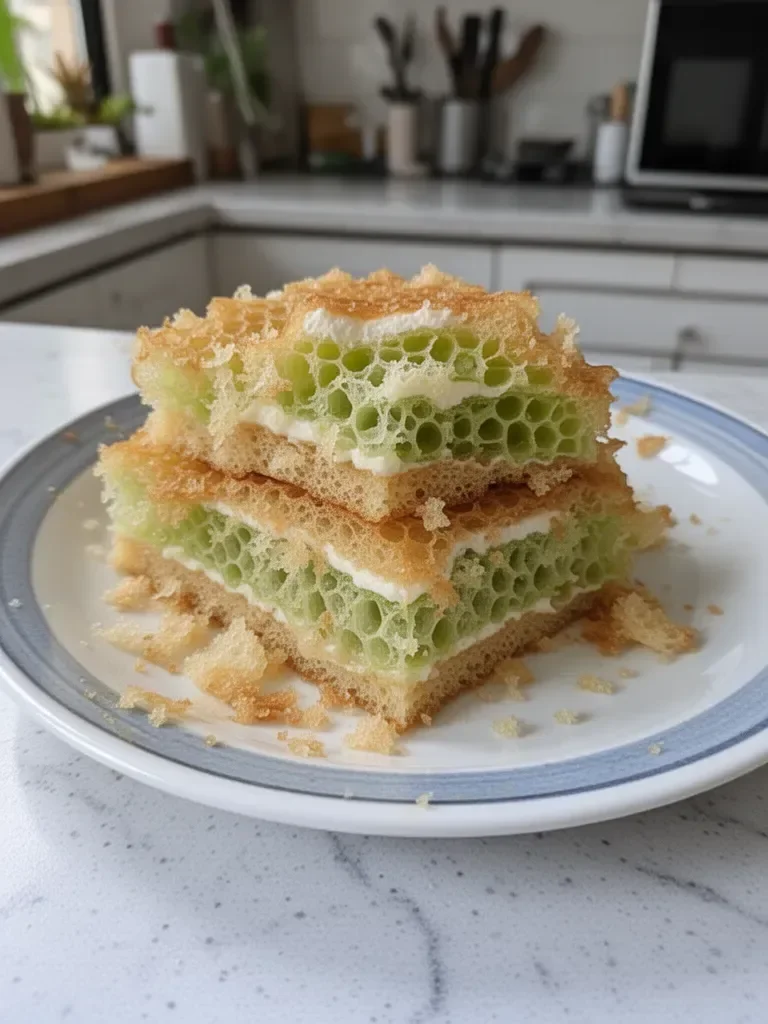
The look of your cake is also important. The top should be golden brown, and the inside should have the characteristic honeycomb-like texture. If you notice it browning too quickly, reduce the baking temperature and cover it with foil.
Troubleshooting/variations
Occasionally, the cake may not rise as expected. This can happen due to expired baking powder. Always check for freshness to ensure a proper rise. If the cake doesn’t have enough flavor, you can increase the pandan extract or add a bit of salt.
Baking experiments can lead to delightful variations. Consider incorporating other flavors such as coconut flakes or a hint of citrus. If you’re feeling adventurous, try different molds or shapes for your cake to make it visually appealing.
Serving and Storing the Vietnamese Honeycomb Cake
Serving/presentation
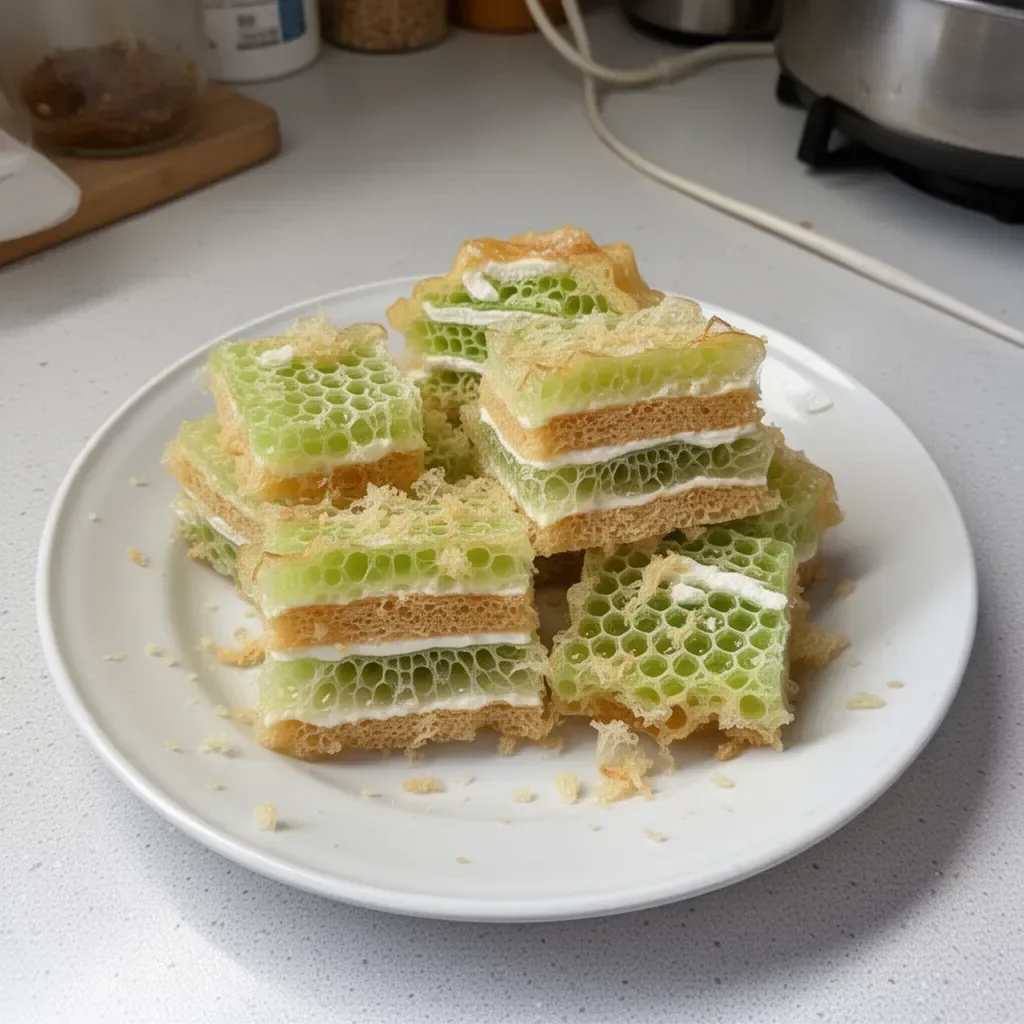
Once your cake is ready, it’s time to present it beautifully. Slice it into generous pieces, revealing the lovely honeycomb texture. Consider garnishing with fresh fruit or a sprinkle of shredded coconut for added flair. A fresh mint leaf can also elevate the presentation, bringing a pop of color.
This cake shines during gatherings and potlucks. Serve it on a large platter, allowing everyone to enjoy this delightful treat. It pairs wonderfully with tea or coffee, making it a versatile dessert for any occasion.
Pairings/storage
After enjoying the Vietnamese honeycomb cake, store any remaining slices in an airtight container. This helps retain moisture and flavor. The cake stays fresh for up to three days at room temperature, or you can refrigerate it for longer-lasting enjoyment.
Consider enjoying it chilled, as the flavors develop further when given time to sit. If you have any leftovers, don’t hesitate to share them with friends or family—they will surely thank you for the delightful experience.
Conclusion
Cherishing the memories created while baking Vietnamese honeycomb cake makes the process rewarding. The combination of coconut milk, pandan, and love transforms basic ingredients into a delightful dessert. Each bite evokes nostalgia and joy, encapsulating the essence of togetherness. With its soft texture and aromatic flavors, this cake invites everyone to indulge. Preparing this dessert not only gratifies the palate but also creates moments worth sharing. Enjoy the journey of crafting your own irresistible Vietnamese honeycomb cake today.
Print
Vietnamese Honeycomb Cake
- Prep Time: 15 minutes
- Cook Time: 40 minutes
- Total Time: 55 minutes
- Yield: 8 servings
- Category: Dessert
- Method: Baking
- Cuisine: Vietnamese
- Diet: Vegetarian
Description
A delightful Vietnamese dessert featuring a soft, pillowy texture infused with rich coconut milk and aromatic pandan.
Ingredients
- 14 ounces Coconut Milk (Use full-fat for richness)
- 10 pieces Pandan Leaves (Can substitute with 1 tsp of pandan extract)
- 5 large Eggs
- 1.33 cups Granulated Sugar (Adjust to taste)
- 0.5 teaspoon Pandan Extract (Double if using extract instead of leaves)
- 1 teaspoon Vanilla Extract
- 1 cup Tapioca Starch
- 16 grams Single Acting Baking Powder
- 1 pinch Salt
Instructions
- Prepare the pandan: If using fresh pandan leaves, steep them in warm water to extract flavor. Blend together with coconut milk for a vibrant mixture. If you’re using pandan extract, combine it directly with the coconut milk.
- Mix the ingredients: In a large mixing bowl, whisk together the eggs and sugar until frothy. Slowly add in the coconut milk and pandan mixture, followed by vanilla extract.
- Combine dry ingredients: In another bowl, sift together the tapioca starch, baking powder, and salt. Gradually add this dry mixture to the wet ingredients, stirring until fully incorporated.
- Prepare to bake: Pour the batter into the greased cake pan. Cover with foil to prevent excess moisture.
- Steam/Bake: Allow the cake to bake for about 40 minutes or until a skewer inserted comes out clean.
- Cool and serve: Let the cake cool in the pan for a few minutes before transferring it to a wire rack. Allow it to cool completely before slicing.
Notes
For a more intense pandan flavor, consider using both pandan leaves and extract. Ensure all ingredients are at room temperature before mixing.