
📑 Table of Contents ▶
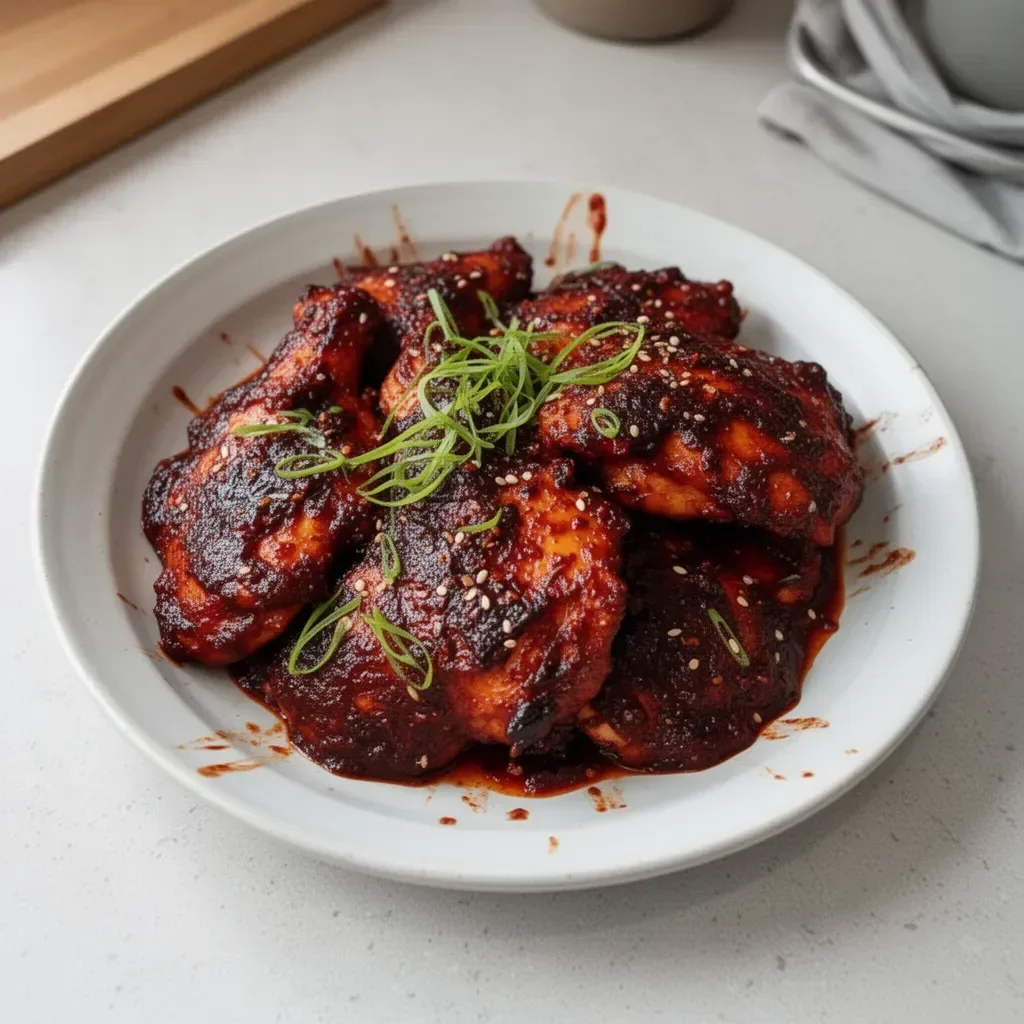
Gochujang Chicken
The first time I tried gochujang chicken, I couldn’t get over the explosion of flavors. It was a chilly evening, and I needed something comforting. I rummaged through my pantry and found a tub of gochujang that had been sitting there for ages. Wanting to make the most out of it, I threw together a marinade for some chicken thighs.
The end result was pure magic. The spice from the gochujang combined with the sweetness of honey and the savory notes of soy sauce created a dish that immediately warmed my soul. I served it to my family, and their eyes lit up with delight. Each bite was succulent, packed with a dynamic flavor profile, and before I knew it, I was jotting down my recipe.
Gochujang chicken has since become a staple in my home, a dish that brings everyone together. It’s an easy weeknight meal that doesn’t skimp on flavor. Let’s dive into the fundamentals of preparing this delectable dish and make your taste buds dance with joy!
Understanding Gochujang Chicken
Fundamentals
Gochujang chicken showcases a beautiful marriage of textures and flavors. The chicken thighs, moist and tender, absorb the rich marinade brilliantly. Each ingredient contributes to the overall taste, creating a sweet and spicy experience you won’t forget.
Chicken thighs stand out as the perfect choice due to their juicy nature. Unlike chicken breasts, they hold moisture well, ensuring every bite is succulent. The combination of gochujang, honey, and soy sauce creates a deep, tantalizing glaze that enhances the natural flavors of the chicken.
Using gochujang adds an earthy depth that elevates this dish. It’s not just about spice; it brings layers of umami to your palate. For anyone looking to impress guests or simply enjoy a hearty meal, gochujang chicken serves as an excellent option.
Preparation/Setup
Proper setup ensures a seamless cooking experience. Start by gathering all your ingredients, as this will streamline the process. For this recipe, you will need boneless, skinless chicken thighs and a handful of pantry staples.
Next, you’ll want to prepare your marinade. In a medium bowl, whisk together the gochujang, soy sauce, honey, rice vinegar, minced garlic, and freshly grated ginger. The mixture should achieve a smooth consistency, ideal for coating the chicken.
Tasting the marinade is essential—this lets you adjust the flavors. Too thick? A splash of water can help. Once the marinade hits the right note, it’s time to prep the chicken, ensuring it gets the best flavor infusion.
Ingredients
To create your delicious gochujang chicken, gather these essential components:
- 600 g boneless, skinless chicken thighs
- 3 tbsp gochujang paste
- 2 tbsp soy sauce
- 1 tbsp honey or maple syrup
- 1 tbsp rice vinegar
- 2 cloves garlic
- 1 tsp freshly grated ginger
- 1 tbsp sesame oil
- 1 tbsp neutral oil
- 2 spring onions
- 1 tsp sesame seeds
Having everything ready ensures that your cooking process flows smoothly. Once prepared, you can move on to marinating the chicken.
Directions
- In a medium bowl, whisk together the gochujang, soy sauce, honey, rice vinegar, minced garlic, and grated ginger until smooth. The sauce should look thick and deeply colored.
- Pat the chicken thighs dry with paper towels, allowing the marinade to cling better.
- Add the chicken to the bowl and toss thoroughly until every piece is well-coated. Cover and marinate in the fridge for at least 30 minutes, or for a deeper flavor, one to two hours.
- Preheat your oven to 200°C (400°F) if baking, or heat a large skillet over medium-high heat with neutral oil.
- For baking: Arrange the chicken on a lined baking sheet, spoon extra marinade over the top, and bake for 18–22 minutes until cooked through and slightly charred.
- For pan-cooking: Place the chicken in the hot skillet and cook for 5–7 minutes per side until a nice caramelized crust forms and the internal temperature reaches 75°C (165°F).
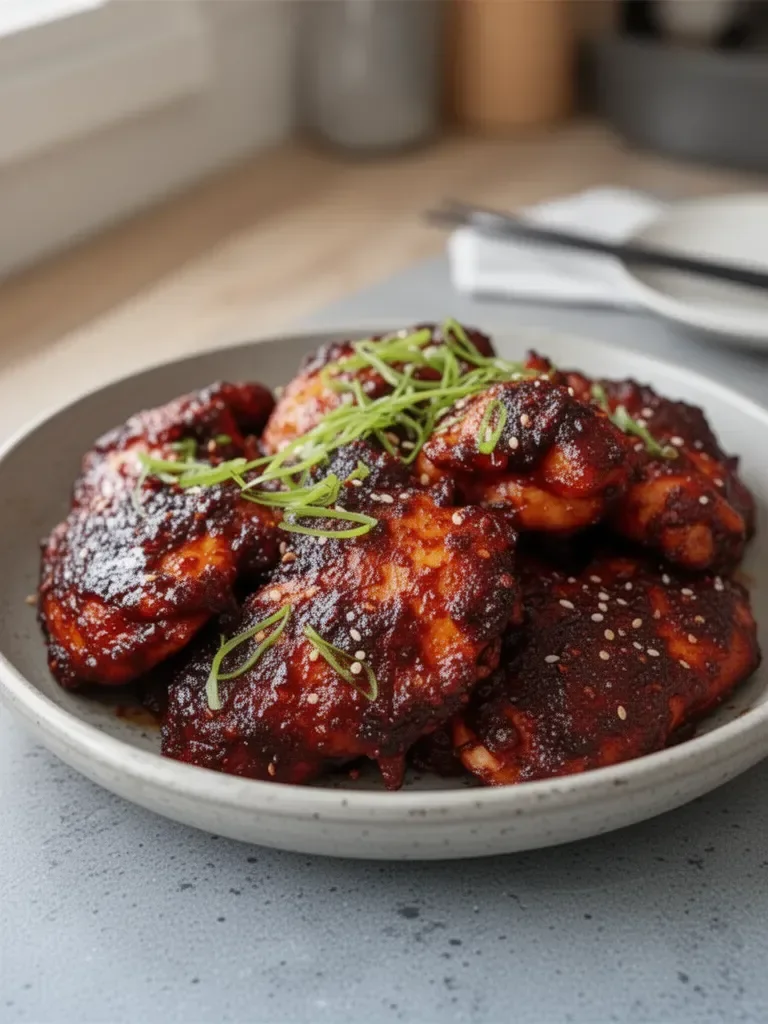
- Transfer the cooked chicken to a cutting board and allow it to rest for a few minutes. Drizzle with sesame oil and sprinkle with sliced spring onions and sesame seeds before serving.
Cooking Techniques for Optimal Flavor
Technique
The cooking technique significantly influences the final dish. Both baking and pan-cooking present unique advantages. Baking allows for a more hands-off approach, ideal for those who prefer multitasking. On the other hand, pan-cooking offers that delightful, caramelized crust that many people crave.
Don’t rush the cooking process. Allow the chicken to sear properly, as this creates a beautiful color and enhances the flavors. Keep an eye on the heat; too high a temperature can char the outside while leaving the inside undercooked.
Tips/Tricks
- Marinating is key. The longer you let the chicken sit in the marinade, the more intense the flavors become. Aim for at least 30 minutes.
- When baking, use parchment paper on your baking sheet for easy cleanup and to prevent sticking.
- For pan-cooking, resist the temptation to move the chicken around too much. Let it rest in the skillet to form that coveted crust.
- If you want an extra kick, consider adding chili flakes to your marinade. This enhances the heat without overshadowing the dish’s overall flavor.
Perfecting Your Gochujang Chicken
Perfecting Results
Achieving the perfect gochujang chicken comes down to a few critical factors. The right cooking temperature and time ensure the chicken cooks evenly while remaining juicy. Always use a meat thermometer to check for doneness at the thickest part of the chicken.
Resting the chicken after cooking is essential. This step allows the juices to redistribute, ensuring that every bite remains moist and flavorful.
Experimenting with seasonings during marination can lead to delightful variations. Don’t hesitate to play around with the marinade by adjusting sweet and salty components according to your preference.
Troubleshooting/Variations
If your chicken turns out too salty, ensure that you balance it out with additional honey or a splash more vinegar. If the marinade becomes too thick, a little water can help create a smoother consistency.
Alternately, if you desire a milder flavor, consider using less gochujang or mixing it with other sauces like teriyaki. You could also switch up the protein by trying this marinade with salmon or tofu for those with different dietary needs.
Serving and Presentation
Serving Presentation
Presenting gochujang chicken beautifully can tantalize your guests even before their first bite. Arrange the cooked chicken on a platter, and drizzle with sesame oil for a shiny finish. Garnish with sliced spring onions and a sprinkle of sesame seeds adds a pop of color and texture.
Consider serving this dish alongside steamed rice or a fresh salad for a complete meal. The contrasting textures of crispy vegetables with succulent chicken make for an appealing plate.
Pairing/Storage
Gochujang chicken pairs incredibly well with a variety of sides. Steamed rice absorbs the flavors beautifully, while a crisp vegetable slaw provides a refreshing contrast.
For storage, allow the chicken to cool before transferring it to an airtight container. It will stay fresh for up to three days in the refrigerator. Reheating in the oven or microwave works well for the next day’s lunch — just remember to enjoy it again!
Gochujang chicken has become a favorite due to its vibrant flavors and ease of preparation. By following the steps laid out, anyone can create a delightful meal that shines at the dinner table and warms the heart.
Print
Gochujang Chicken
- Prep Time: 15 minutes
- Cook Time: 25 minutes
- Total Time: 40 minutes
- Yield: 4 servings
- Category: Main Course
- Method: Baking or Pan-Cooking
- Cuisine: Korean
- Diet: Gluten-Free
Description
A comforting and flavorful dish featuring tender chicken thighs marinated in a spicy-sweet gochujang glaze.
Ingredients
- 600 g boneless, skinless chicken thighs
- 3 tbsp gochujang paste
- 2 tbsp soy sauce
- 1 tbsp honey or maple syrup
- 1 tbsp rice vinegar
- 2 cloves garlic, minced
- 1 tsp freshly grated ginger
- 1 tbsp sesame oil
- 1 tbsp neutral oil
- 2 spring onions, sliced
- 1 tsp sesame seeds
Instructions
- Whisk together the gochujang, soy sauce, honey, rice vinegar, minced garlic, and grated ginger until smooth.
- Pat the chicken thighs dry with paper towels.
- Add the chicken to the bowl and toss thoroughly until well-coated.
- Cover and marinate in the fridge for at least 30 minutes, or for one to two hours for deeper flavor.
- Preheat your oven to 200°C (400°F) or heat a large skillet over medium-high heat.
- For baking: Arrange the chicken on a lined baking sheet, spoon extra marinade over, and bake for 18–22 minutes.
- For pan-cooking: Place the chicken in the skillet and cook for 5–7 minutes per side until a caramelized crust forms.
- Transfer the cooked chicken to a cutting board, allow to rest, and drizzle with sesame oil.
- Garnish with sliced spring onions and sesame seeds before serving.
Notes
Marinating longer enhances flavor; serve with rice or salad for a complete meal.