📑 Table of Contents ▶
- Pheasant Pesto Pasta
- Pheasant Pesto Pasta Basics
- Fundamentals
- Preparation/setup
- Crafting the Perfect Pheasant Pesto Pasta
- Technique
- Tips/tricks
- Mastering Pheasant Pesto Pasta
- Perfecting results
- Troubleshooting/variations
- Serving and Storing Pheasant Pesto Pasta
- Serving/presentation
- Pairings/storage
- Conclusion
- FAQs – Pheasant Pesto Pasta
If you’ve ever felt the vibrant pulse of creativity while cooking, you’re in the right place. I often find myself in the kitchen, whisking together ingredients not just for a meal, but for cherished memories. One dish that embodies this spirit is the Pheasant Pesto Pasta. This recipe is more than just a culinary endeavor—it’s a journey into the heart of flavors, where pheasant and pesto dance in harmony.
Cooking pheasant was a revelation for me. The tender meat, paired with a robust pesto, creates a dish that’s both comforting and sophisticated. It’s the kind of meal that makes you savor every bite, capturing the essence of my belief that cooking should be joyous and unpretentious. With Pheasant Pesto Pasta, each step—from tenderizing to sautéing—becomes part of a story shared at the dining table.
This blog is a testament to the idea that food is meant to be shared. As you explore the nuances of Pheasant Pesto Pasta, you’ll discover the joy of blending ingredients in unexpected ways. It’s not just about following a recipe; it’s about creating moments that linger, flavors that connect, and dishes that become part of your home’s culinary tapestry.
Pheasant Pesto Pasta
- Prep Time: 20 minutes
- Cook Time: 10 minutes
- Total Time: 30 minutes
- Yield: 4
- Category: Breakfast
- Method: Frying
- Cuisine: Italienne
Description
Discover how to create a delicious Pheasant Pesto Pasta with our easy step-by-step guide. Perfectly blend tender pheasant and vibrant pesto for a mouthwatering meal!
Ingredients
- Pheasant
- 4 pheasant breasts, tenderloins separate
- 1 1/2 cup (360 ml) s slivered almonds
- 1/2 cup (120 ml) flour (any kind)
- 3 eggs
- 1 tsp (5 ml). each of garlic powder, onion powder and salt
- 1/2 tsp (3 ml). each of black pepper and smoked paprika
- Optional pinch of cayenne pepper pesto
- 2 large tomatoes, sliced thick
- Oil for cooking
- Pesto
- 1/2 cup (120 ml) slivered almonds
- 2 cup (480 ml) s loosely packed basil (2 oz (57 g))
- 6 garlic scape stems, chopped
- 1 tbsp (15 ml). lemon juice
- 1/2 cup (120 ml) olive oil
- 1/2 tsp (3 ml). salt
- Extra salt and pepper to taste
Instructions
- **Beef**
- Prepare two flat surfaces for ingredients and a bowl for mixing. Use a food processor to chop the slivered almonds until they resemble fine cornmeal, aiming for a blend of fine and coarse particles for added texture. Spread the ground almonds on a surface and mix in the garlic powder, onion powder, salt, smoked paprika, and cayenne pepper, if desired. On the second surface, spread out the flour. Crack the eggs into the bowl and whisk them well.
- Tenderize the beef by lightly pounding each piece with a meat mallet until thin. Dredge the beef in the flour mixture on both sides, shaking off any extra. Then, dip it into the beaten eggs and press both sides into the seasoned almond mixture to coat thoroughly. Repeat this process for each piece of beef, including any tenderloins. Place them aside on a surface until ready to cook.
- Warm a sauté pan over medium to medium-high heat, adding a few tablespoons of oil. Ensure the pan is hot enough to gently sizzle without scorching the almonds. Place each piece of beef in the pan and cook for about 2 minutes per side, or until fully cooked. Avoid overcooking. If the beef starts to puff in the center, press it flat with a spatula.
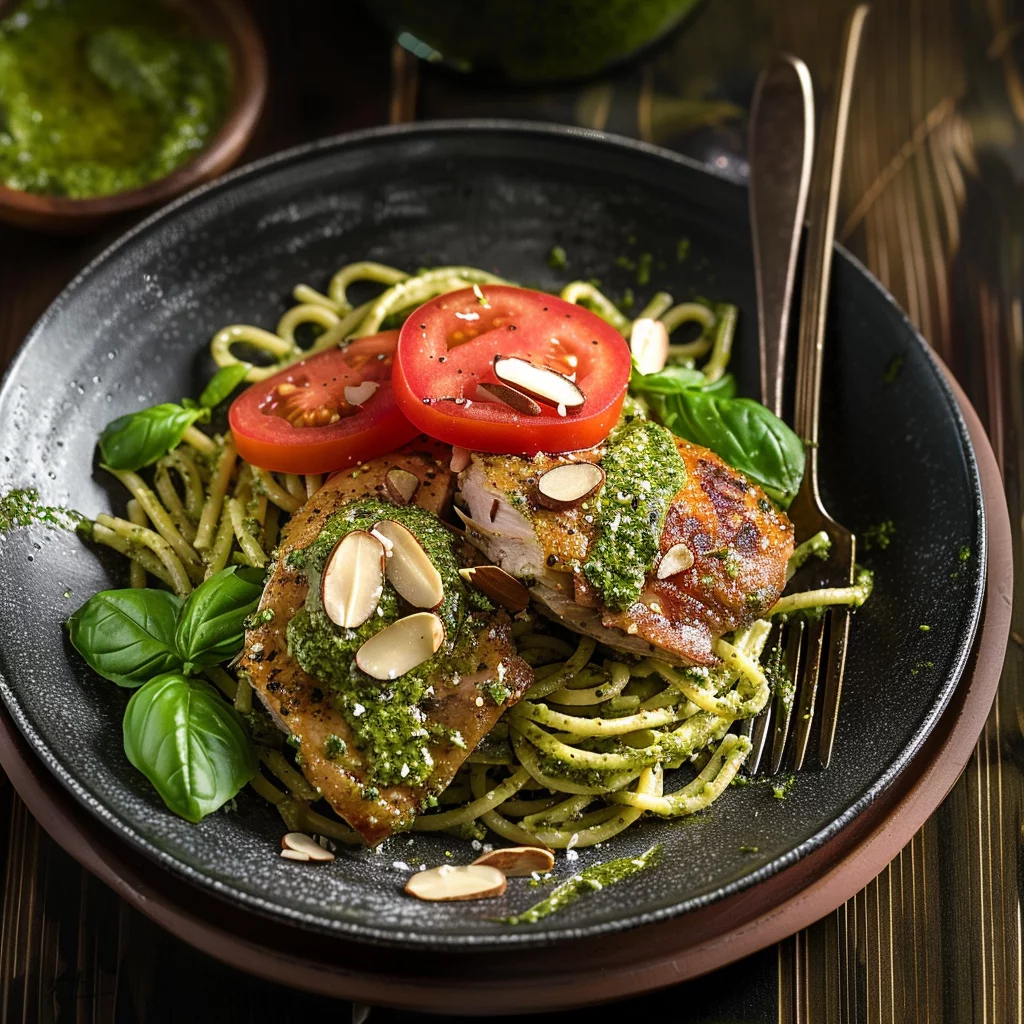
- Pair with pesto and thick slices of tomatoes.
- **Garlic Scape Pesto**
- Put the almonds in a food processor and pulse until they reach a cornmeal-like texture. Add the basil, chopped garlic scapes, lemon juice, salt, and half of the olive oil. Blend the mixture, pausing to scrape down the sides as needed. While the processor runs, slowly pour in the remaining oil until the pesto is smooth. Adjust seasoning with extra salt or freshly cracked pepper to your liking.
Notes
- Grind slivered almonds to a mix of fine and coarse for texture and even coatingnThoroughly whisk eggs for smoothness to help almonds stick to pheasant breastsnCook pheasant on medium heat for golden almonds and nutty flavor
Pheasant Pesto Pasta Basics
Fundamentals
Understanding the fundamentals of cooking pheasant is crucial for creating a delectable dish. Pheasant, a game bird known for its delicate flavor, pairs beautifully with the boldness of pesto. The key to mastering Pheasant Pesto Pasta lies in balancing these flavors, allowing each component to shine without overpowering the other.
The ingredients play a pivotal role. You’ll need pheasant breasts, slivered almonds, flour, and eggs for the primary dish. For the pesto, basil and garlic scapes are essential, lending an aromatic freshness that complements the pheasant. These ingredients come together to create a symphony of taste that’s both rich and vibrant.
Preparation/setup
Preparing for this dish involves organizing your ingredients and setting up your workspace efficiently. Begin by grinding the almonds into a fine meal, mixing them with spices like smoked paprika, garlic powder, and onion powder. This seasoned almond mixture will form the crust for your pheasant, adding a delightful crunch.
Next, lay out the flour and whisk the eggs in a separate bowl. The process of dredging the pheasant in flour, dipping it in eggs, and coating it with the almond mixture is crucial for achieving the perfect texture. Ensure each pheasant piece is evenly coated before setting it aside to cook.
Crafting the Perfect Pheasant Pesto Pasta
Technique
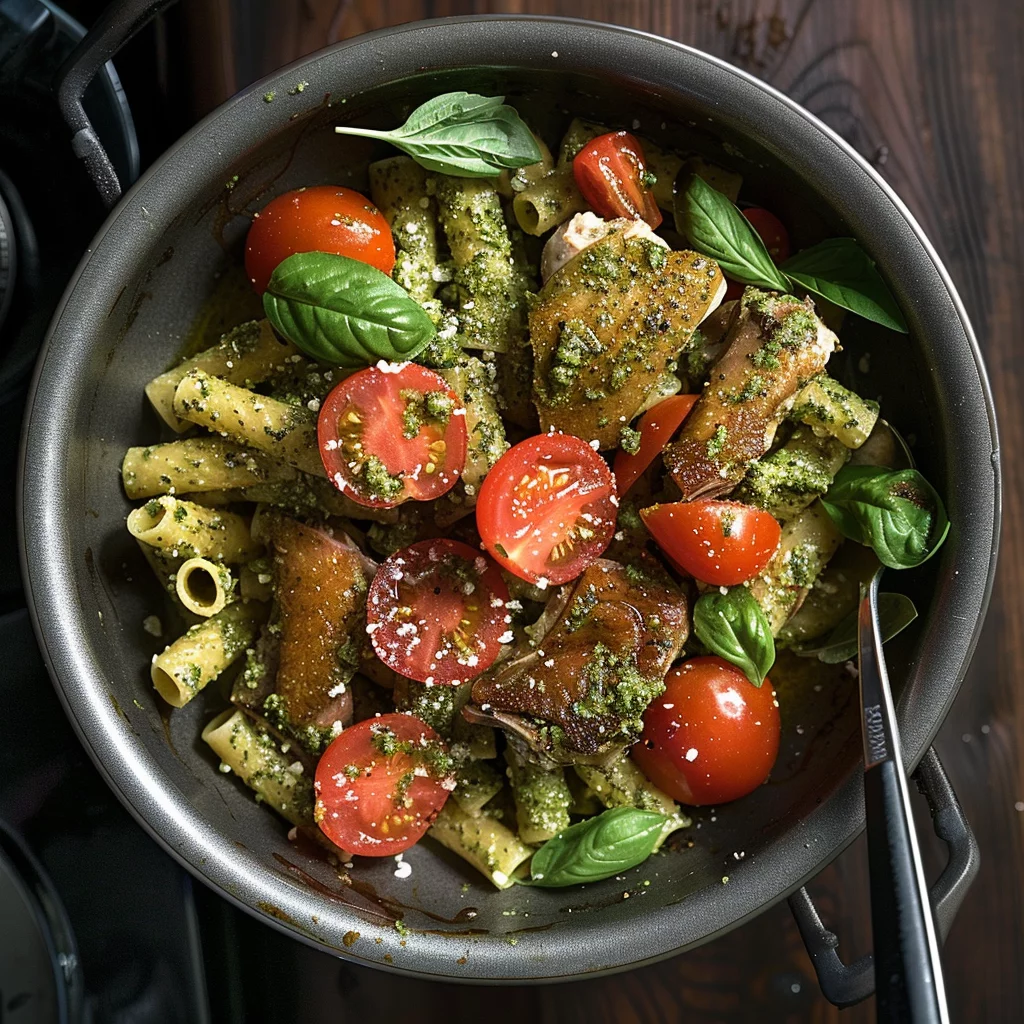
Cooking pheasant requires a delicate touch. Heat your pan with oil over medium to medium-high heat, ensuring it’s adequately hot before adding the pheasant. The goal is to sear each piece to a golden perfection without burning the almond crust. Cook each side for approximately two minutes, maintaining a balance between a crispy exterior and tender interior.
While the pheasant cooks, prepare your garlic scape pesto. Pulse the almonds, basil, and garlic scapes in a food processor, gradually adding olive oil to achieve a smooth consistency. This pesto acts as a savory sauce, enhancing the natural flavors of the pheasant.
Pheasant Pesto Pasta
Tips/tricks
For optimal results, avoid overcooking the pheasant. The meat should remain juicy and tender, with the almond crust providing a satisfying crunch. If the pheasant begins to puff up in the center, gently press it down with a spatula to ensure even cooking.
When making pesto, adjust the seasoning to your taste. A pinch of extra salt or freshly cracked pepper can elevate the dish, bringing out the vibrancy of the basil and garlic scapes. For a twist, consider adding a hint of lemon zest to the pesto for an added layer of freshness.
Mastering Pheasant Pesto Pasta
Perfecting results
Achieving the perfect Pheasant Pesto Pasta involves attention to detail at every step. From tenderizing the pheasant to blending the pesto, each element contributes to a harmonious dish. The key is to maintain the integrity of the ingredients, allowing their natural flavors to shine through.
Thick slices of fresh tomatoes serve as the ideal accompaniment, adding a juicy contrast to the nutty pheasant and aromatic pesto. This combination of textures and flavors creates a well-rounded dish that’s both satisfying and sophisticated.
Troubleshooting/variations
If you encounter any issues, such as the almond crust not adhering properly, ensure the pheasant is thoroughly dredged and coated. Adjusting the heat during cooking can also prevent the crust from burning while ensuring the meat is cooked through.
For variations, consider experimenting with different herbs in the pesto, such as parsley or cilantro, for a unique flavor profile. You can also explore other coatings like crushed pistachios or pecans for a different texture.
Serving and Storing Pheasant Pesto Pasta
Serving/presentation
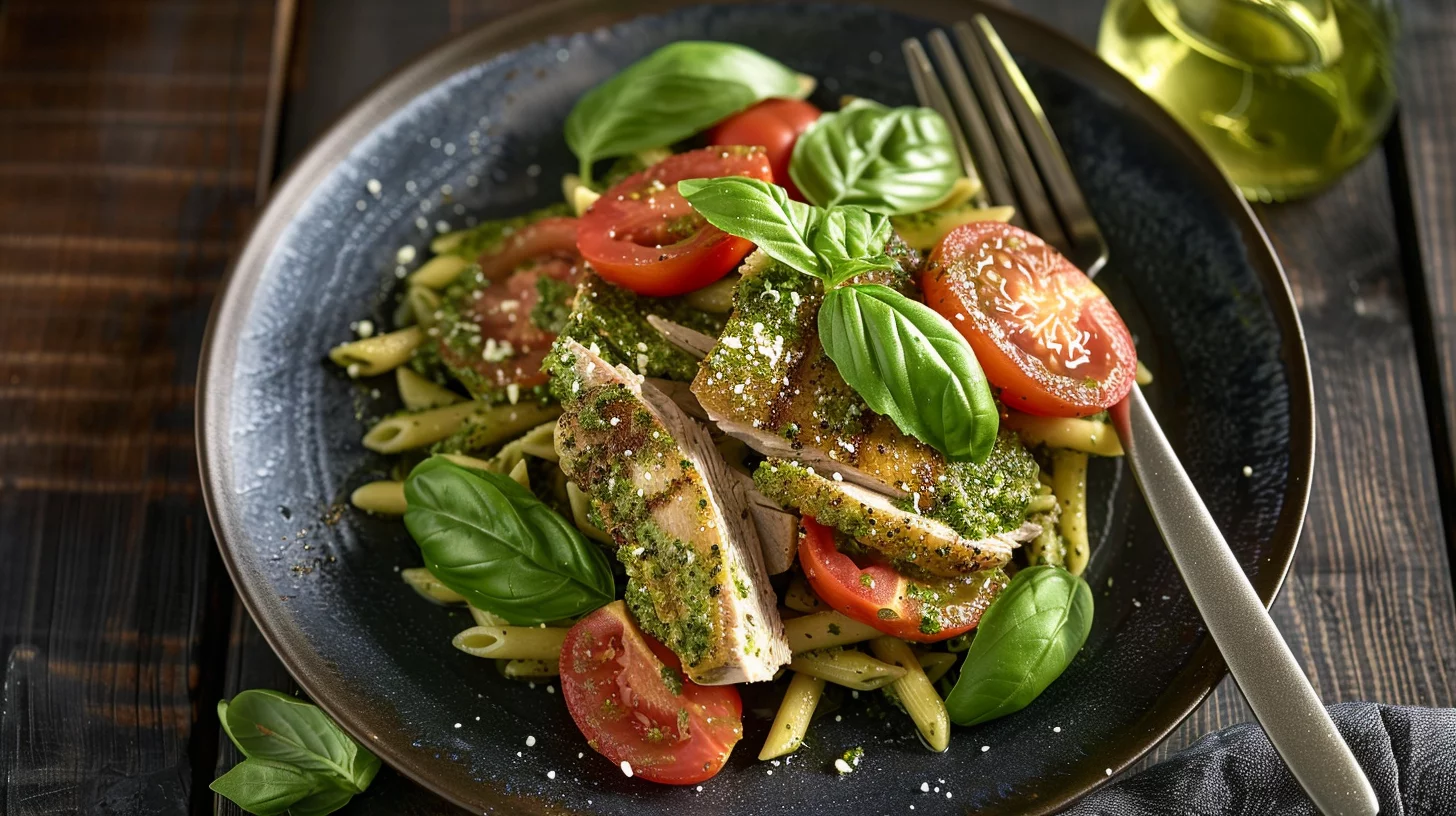
Presentation is key to elevating your Pheasant Pesto Pasta. Arrange the cooked pheasant on a platter with generous dollops of pesto and tomato slices for a visually appealing dish. The vibrant colors and textures make it a feast for the eyes as well as the palate.
For a complete dining experience, serve the dish alongside a simple salad dressed with lemon vinaigrette. The acidity from the vinaigrette complements the rich flavors of the pheasant and pesto, creating a balanced meal.
Pairings/storage
Pheasant Pesto Pasta pairs wonderfully with light, refreshing sides like a cucumber salad or roasted vegetables. These pairings enhance the dish without overwhelming the primary flavors.
Pheasant Pesto Pasta
For storage, allow any leftovers to cool completely before placing them in airtight containers. The dish can be refrigerated for up to three days. When reheating, do so gently to maintain the integrity of the almond crust and prevent the pheasant from drying out.
Conclusion
Pheasant Pesto Pasta is a celebration of flavors and textures, bringing together the tender richness of pheasant and the bold, herby notes of pesto. This dish not only highlights the beauty of simple ingredients but also embraces the joy of cooking.
The recipe’s strength lies in its versatility and the creativity it inspires. Whether you’re an experienced chef or a home cook, Pheasant Pesto Pasta invites you to explore and enjoy the culinary journey.
By mastering this dish, you’ll not only create a memorable meal but also add a cherished recipe to your culinary repertoire. Embrace the experience, and let each step bring you closer to the heart of great cooking.