
📑 Table of Contents ▶
- The Fundamentals of Japanese Curry on Rice
- Fundamentals
- Preparation/Setup
- Directions
- Techniques for the Perfect Japanese Curry on Rice
- Technique
- Tips/Tricks
- Perfecting Results with Japanese Curry on Rice
- Perfecting Results
- Troubleshooting/Variations
- Serving and Storing Japanese Curry on Rice
- Serving/Presentation
- Pairings/Storage
- Conclusion
Japanese Curry on Rice
The first time I tasted Japanese curry on rice, it felt like a warm embrace. It was a chilly evening, and the comforting aroma wafted from the kitchen, drawing me in. That rich, savory scent promised not just a meal but an experience. I watched as my family gathered around the table, eagerly anticipating the delicious curry that would soon grace our plates. The way the Japanese curry melded with fluffy rice created a harmony of flavors that I will always cherish.
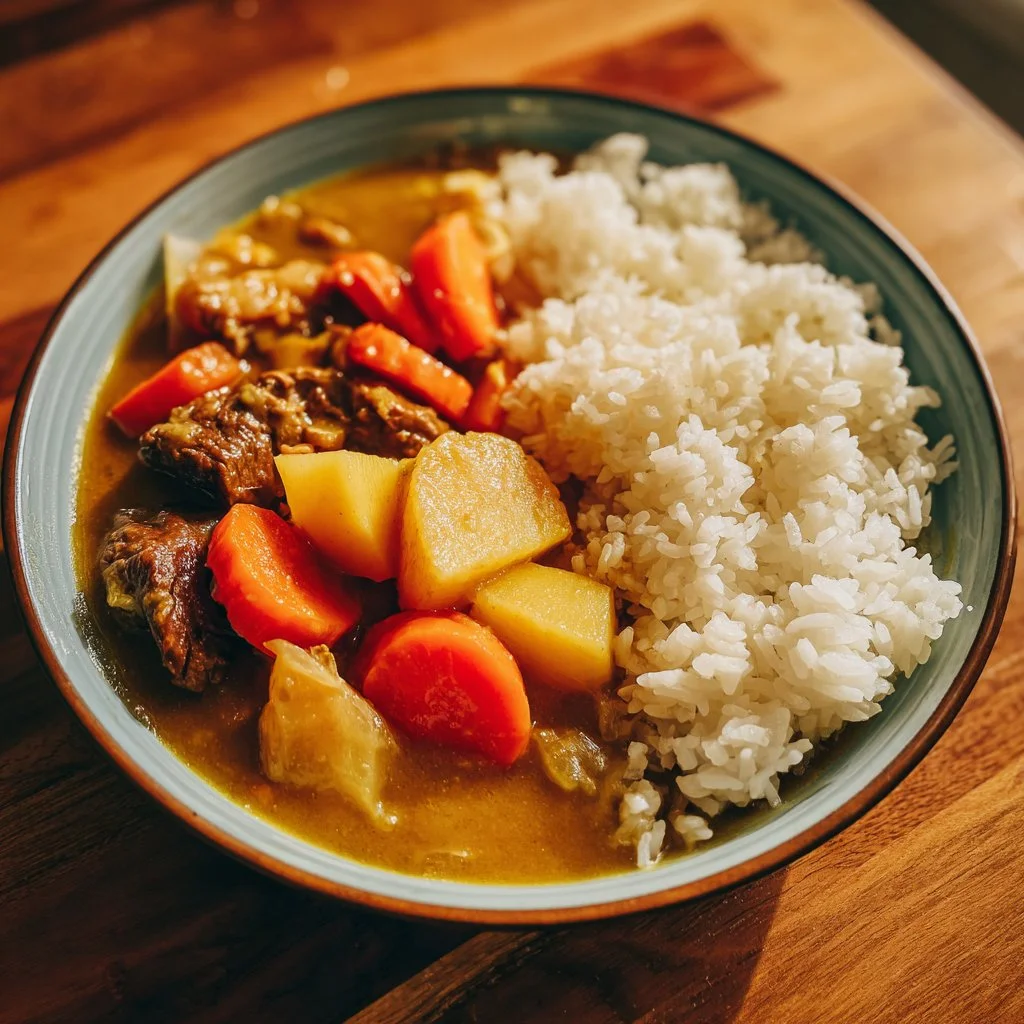
Japanese curry on rice brings me back to that moment. It’s a dish that warms the heart and fills the belly, perfect for any occasion. The thick, flavorful sauce accompanied by tender chunks of meat and veggies creates a satisfying meal that stands the test of time. Making this dish at home not only allows creativity but also brings that nostalgic feeling right into your kitchen.
Every bite tells a story, mixing sweet hints from apples and honey with savory notes from the vegetables and beef. The texture of tender potatoes, carrots, and onions cooked to perfection makes the dish even better. This Japanese curry on rice isn’t just food; it’s a celebration of flavors and family.
The Fundamentals of Japanese Curry on Rice
Fundamentals
Japanese curry on rice has a unique foundation. Unlike Indian curry, which can be quite spicy, Japanese curry offers a milder flavor profile that many enjoy. It is often characterized by its thick sauce, which gets its richness from curry roux, a blend of spices that usually includes turmeric, cumin, and coriander, along with a blend of flour and fats.
The base of this dish consists of succulent protein, hearty vegetables, and a flavorful sauce. Whether you choose to use beef or a protein alternative, each one can transform the dish according to your taste. This flexibility makes Japanese curry versatile and appealing to a broader audience.
Preparation/Setup
To prepare for your journey into making Japanese curry, begin by gathering all ingredients. Having everything ready ensures a seamless cooking process. Grab two large onions, two medium carrots, and three Yukon gold potatoes. Also, have two cloves of garlic, a tablespoon of butter, five cups of water or stock, and one pound of cubed beef or a protein alternative prepared.
In addition, stock up on essential flavor enhancers: eight ounces of Japanese curry roux, a tablespoon of Worcestershire sauce, a tablespoon of ketchup, and one tablespoon of honey. To add a touch of sweetness, don’t forget one red apple like a Fuji or Honeycrisp. Finally, have eight cups of medium-grain white rice or your preferred rice type ready for serving.
Ingredients
- 2 large onions
- 2 medium carrots
- 3 Yukon gold potatoes
- 2 cloves garlic
- 1 tbsp butter
- 5 cups water or stock
- 1 lb cubed beef or protein alternative
- 8 oz Japanese curry roux
- 1 tbsp Worcestershire sauce
- 1 tbsp ketchup
- 1 tbsp honey
- 1 red apple (Fuji or Honeycrisp)
- 8 cups medium-grain white rice or preferred rice type
Directions
Start by chopping the potatoes, carrots, and onions into large chunks or slices, keeping them roughly one inch in size. Mince the garlic and grate the apple. To remove excess starch from the potatoes, soak the chunks in a bowl of warm water for 15 minutes.
Before cooking, salt the beef cubes and let them rest at room temperature for around 10 minutes. In a pot over medium heat, add one teaspoon of cooking oil. Once heated, add the beef cubes, searing them for two to three minutes until browned on all sides. After browning, remove the beef from the pot.
Add the butter and chopped onions to the pot. Sauté for about eight minutes until the onions turn caramelized. During the last 30 seconds of this step, add the minced garlic, letting it release its aroma. Next, introduce the soaked potatoes and carrots, stirring for another minute.
Return the cooked beef back to the pot and pour in five cups of water. For enhanced flavor, consider adding the grated apple, honey, ketchup, and Worcestershire sauce, stirring it all together. Let the mixture simmer on medium-low heat, covered, for 15 minutes, stirring occasionally.
Once it reaches a boil, skim off any scum that appears on the surface. Continue cooking, checking the potato’s doneness by piercing it with a wooden chopstick. The potato should be tender when it pushes through easily; at that point, turn off the heat.
Carefully add the curry roux to the pot, using a ladle to submerge one to two cubes at a time in water. Gently dissolve the cubes using chopsticks or a spoon. Let it simmer uncovered on medium-low heat for another 15 minutes, stirring frequently to avoid burning at the bottom.
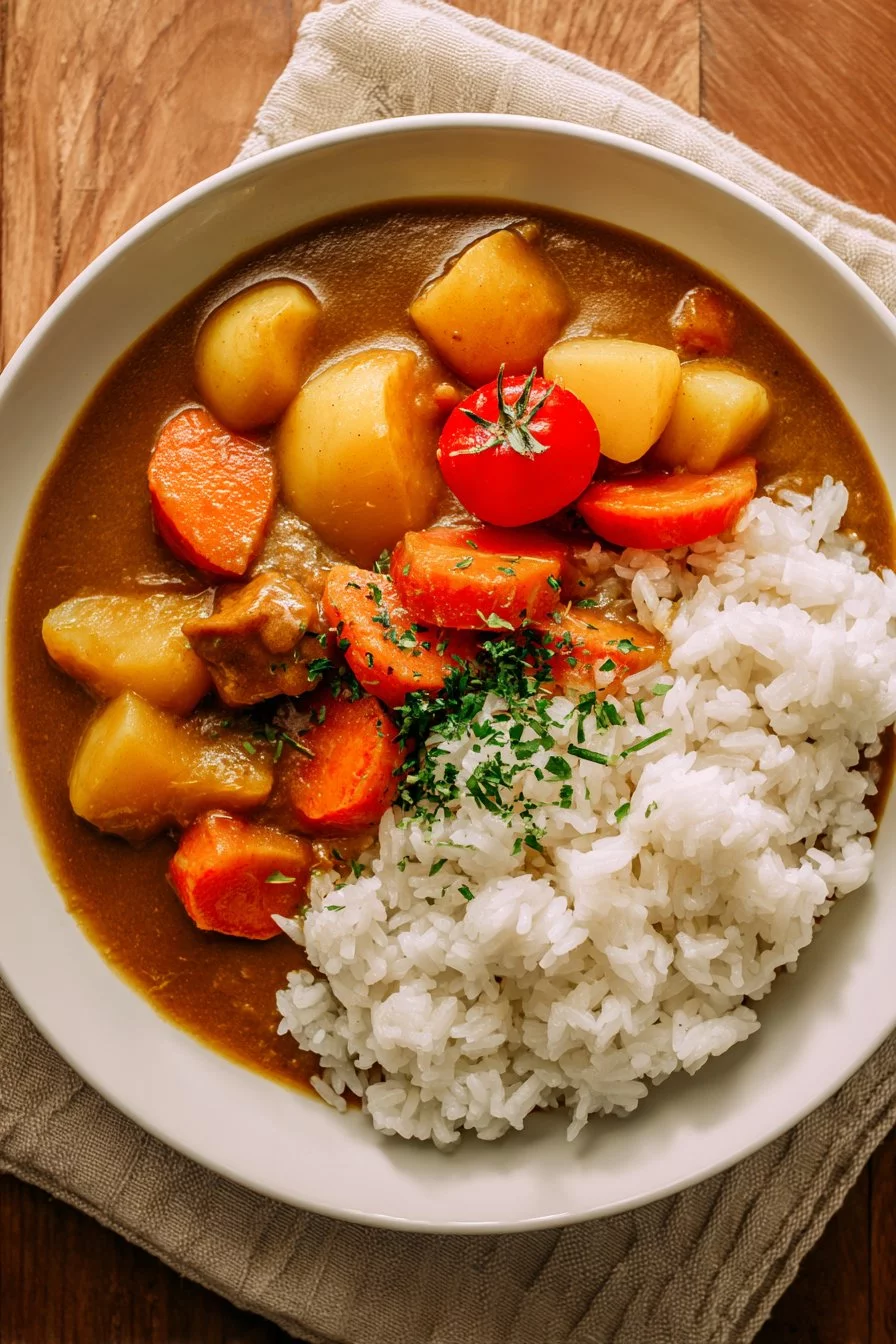
When it thickens to your liking, remove from heat. Serve this delicious Japanese curry over a bowl of steamed rice and enjoy the delightful warm flavors it brings.
Techniques for the Perfect Japanese Curry on Rice
Technique
Mastering the technique of Japanese curry involves patience and attention to detail. Start with browning the beef properly to lock in the flavors and juices. The caramelization of the onions also plays a crucial role in building a rich base for your curry.
The secret to achieving that balanced flavor lies in precisely timing each ingredient’s addition. Sauté the vegetables, but don’t rush. They need just enough time to soften while maintaining their shape. When adding the curry roux, remember to dissolve it slowly. This ensures an even distribution throughout the pot, ultimately enhancing the curry’s thickness and consistency.
Tips/Tricks
A few tips can elevate your Japanese curry experience. Experiment with different proteins or include tofu for a vegetarian option. You can also vary vegetables according to personal preference; bell peppers, mushrooms, or even eggplant could work beautifully.
If you prefer a spicier kick, consider adding chili flakes or a dash of hot sauce while simmering the curry. Remember, adjusting the sweetness can make a significant difference. Increasing the amount of grated apple or honey allows you to tailor the dish to your taste preferences.
Lastly, ensure the rice is cooked perfectly as it serves as the foundation for this delicious meal. Rinse the rice before cooking it to remove excess starch. This step leads to fluffier rice that complements the curry wonderfully.
Perfecting Results with Japanese Curry on Rice
Perfecting Results
Achieving the perfect Japanese curry on rice requires practice and adjustments based on your household’s flavor preferences. If the curry turns out too thick, simply add a bit more water during the last stages of cooking until it reaches the desired consistency. Conversely, if it’s too thin, allow it to simmer longer to thicken up.
To enhance the flavor further, adding a touch more Worcestershire sauce or ketchup can create added depth. Remember, tasting along the way allows you to fine-tune the flavors to your liking.
Troubleshooting/Variations
Troubleshooting any issue during your Japanese curry preparation is essential. If the dish seems overly salty, adding a bit of grated apple can balance the flavors. Alternatively, if it feels too bland, a sprinkle of salt might just do the trick.
Variations can make cooking fun and personalized. Try incorporating seasonal vegetables or adding different spices to create a unique spin on traditional Japanese curry. Substituting brown rice for white rice could not only alter the flavor but also provide additional nutrients.
Serving and Storing Japanese Curry on Rice
Serving/Presentation
Presenting Japanese curry on rice can be as fun as preparing it. Use a large bowl for the curry and mound a serving of rice on the side, allowing guests to pour the curry over the rice if they prefer. Alternatively, creating a balanced plate with one side of the rice and the curry on the other showcases the dish beautifully.
For an extra pop of color, garnish with chopped green onions or sesame seeds. Presenting the dish with salad or pickles on the side enhances the overall dining experience, allowing a medley of flavors to shine.
Pairings/Storage
While enjoying Japanese curry on rice, pairing it with a crisp cucumber salad offers a refreshing contrast. For storage, placing leftovers in an airtight container allows it to maintain its flavors. Leftover curry can remain fresh for up to three days in the refrigerator.
When reheating, add a splash of water to restore moisture. For longer storage, consider freezing it in individual portions. This option helps maintain the uniformity of flavors, allowing you to enjoy a comforting meal whenever desired.
Conclusion
Japanese curry on rice encapsulates warmth, comfort, and family traditions in each bite. It tells a story of flavors and brings people together over shared meals. Preparing this dish at home allows for creativity in ingredients and enhances the dining experience with personalized touches. Each preparation offers a unique variation, making it a staple in many households. Embrace the process, learn from it, and cherish the delicious outcomes that await you.
Print
Japanese Curry on Rice
- Prep Time: 30 minutes
- Cook Time: 45 minutes
- Total Time: 75 minutes
- Yield: 6 servings
- Category: Main Course
- Method: Simmering
- Cuisine: Japanese
- Diet: None
Description
A comforting dish featuring savory Japanese curry served over fluffy rice, perfect for any occasion.
Ingredients
- 2 large onions
- 2 medium carrots
- 3 Yukon gold potatoes
- 2 cloves garlic
- 1 tbsp butter
- 5 cups water or stock
- 1 lb cubed beef or protein alternative
- 8 oz Japanese curry roux
- 1 tbsp Worcestershire sauce
- 1 tbsp ketchup
- 1 tbsp honey
- 1 red apple (Fuji or Honeycrisp)
- 8 cups medium-grain white rice or preferred rice type
Instructions
- Chop the potatoes, carrots, and onions into large chunks or slices, keeping them roughly one inch in size. Mince the garlic and grate the apple.
- Soak the potato chunks in warm water for 15 minutes to remove excess starch.
- Salt the beef cubes and let them rest at room temperature for 10 minutes.
- In a pot over medium heat, add 1 tsp of cooking oil and sear the beef cubes for 2-3 minutes until browned on all sides. Remove from the pot.
- Add butter and chopped onions to the pot, sauté for 8 minutes until caramelized. Add minced garlic during the last 30 seconds.
- Introduce the soaked potatoes and carrots, stirring for another minute.
- Return the cooked beef to the pot and pour in 5 cups of water. Add grated apple, honey, ketchup, and Worcestershire sauce; stir together.
- Simmer covered on medium-low heat for 15 minutes, stirring occasionally.
- Check for scum and skim off. Pierce potatoes with a wooden chopstick to check tenderness.
- Add curry roux, dissolving it slowly in the pot. Let it simmer uncovered for another 15 minutes, stirring frequently.
- Remove from heat when thickened to your liking and serve over steamed rice.
Notes
Experiment with different proteins or add vegetables like bell peppers and mushrooms for variation.