📑 Table of Contents ▶
Best Pavlova Recipe
There’s nothing quite like the sweet and delicate nature of a pavlova. Growing up, making pavlova was a cherished family tradition. It meant gathering in the kitchen, the aroma of freshly whipped egg whites mixing with sweet sugar filling the air. The anticipation would build as we watched the fluffy meringue rise in the oven, transforming into a beautiful pavlova that we eagerly topped with fresh berries.
Pavlova has a way of bringing smiles to the table. Whether serving it at a festive gathering, a birthday party, or just a casual family dinner, its light and airy texture never fails to impress. This recipe holds a special place in my heart, and I’m excited to share it with you.
With just a few simple ingredients, you can create a stunning pavlova that will leave everyone begging for more. This recipe makes a perfect base for toppings, and the possibilities are endless. Let’s dive into the best pavlova recipe that will surely become a favorite in your household.
Best Pavlova Recipe: Fundamentals
Fundamentals
Pavlova is a meringue-based dessert named after the Russian ballerina Anna Pavlova. It has a crisp outer shell and a soft, marshmallow-like interior. Understanding the fundamentals of making pavlova is crucial for achieving that perfect combination of textures.
The key to a successful pavlova lies in the egg whites. Using room-temperature egg whites ensures better volume when whisking. The sugar also plays a vital role; it stabilizes the meringue and prevents it from collapsing. Each component has its purpose, creating a delicious masterpiece when combined perfectly.
Preparation/setup
Before diving into the recipe, set yourself up for success. Preheat the oven to 300°F (150°C) as the pavlova needs a consistent temperature to bake evenly. Gather all your ingredients and tools: a large mixing bowl, a whisk (or electric mixer), a spatula, and parchment paper cut into a circle to line your baking tray.
Wiping down your mixing bowl and whisk with vinegar helps create a clean environment for beating the egg whites. Any grease can prevent them from whipping up properly. This simple step can make a world of difference in your pavlova’s outcome.
Ingredients
For this exquisite pavlova, ensure you have the following ingredients:
- 6 egg whites (at room temperature)
- 1 1/2 cups granulated/caster sugar
- Pinch of salt
- 3 tsp cornflour/cornstarch
- 1 tsp white vinegar
- 1 tsp vanilla essence
- 1 cup cream (for whipping)
- Fresh strawberries or other berries (for serving)
Each ingredient plays a critical role. The egg whites provide the structure, while sugar adds sweetness and helps stabilize the mixture. Cornflour works to improve the texture, making the pavlova tender, while vinegar and vanilla essence add depth of flavor.
Directions
- Preheat the oven to 300°F (150°C).
- Soak a paper towel in white vinegar and use it to wipe down your mixing bowl and whisk attachment. Discard the paper towel.
- In the prepared bowl, whisk the egg whites and a pinch of salt until stiff peaks form.
- Gradually add sugar, about 1/4 cup at a time, whisking after each addition for about a minute until the sugar dissolves. To check, rub a small amount between your fingers; if it feels grainy, keep whisking.
- After incorporating all the sugar, whisk on high for three minutes until the mixture is thick and glossy.
- In a small bowl, combine cornflour, vinegar, and vanilla essence. Add this to the meringue mixture and whisk until just combined.
- Line a 12-inch round pizza tray with a circle of parchment paper.
- Scoop the meringue onto the lined tray, forming a circle about 8-9 inches in diameter.
- Use a spatula to shape the pavlova, creating neat lines as you move toward the top.
- Lower the oven temperature to 250°F (120°C) and place the pavlova in the center of the oven.
- Bake for 1 to 1 hour and 15 minutes until it’s lightly browned. Check the texture; it should be dry to the touch.
- Turn off the oven and leave the pavlova inside for three hours to cool down completely.
Perfecting Your Pavlova: Technique
Technique
Mastering the technique of making pavlova involves understanding the nuances of meringue-making. Each step influences the final product’s texture and appearance. The whisking technique is vital; using electric mixers will simplify the process and result in more volume than hand whisking.
Beating the egg whites to stiff peaks allows for the maximum rise, providing that classic pavlova fluffiness. Take care when adding sugar; doing so gradually ensures consistent incorporation. A glossy mixture signifies the sugar’s complete dissolution, which is essential for achieving that ideal pavlova.
Tips/Tricks
Here are a few helpful tips to ensure your pavlova turns out perfectly every time:
- Always use room-temperature egg whites; cold egg whites do not whip to the same volume.
- Make sure all bowls and tools are completely clean and free from grease.
- Avoid making pavlova on a humid day, as moisture can negatively affect the texture.
- If you have trouble with your pavlova cracking, reduce the oven temperature slightly.
- Store any extra pavlova in a cool, dry place to maintain its crispness until you’re ready to serve.
Perfecting Your Pavlova: Results
Perfecting results
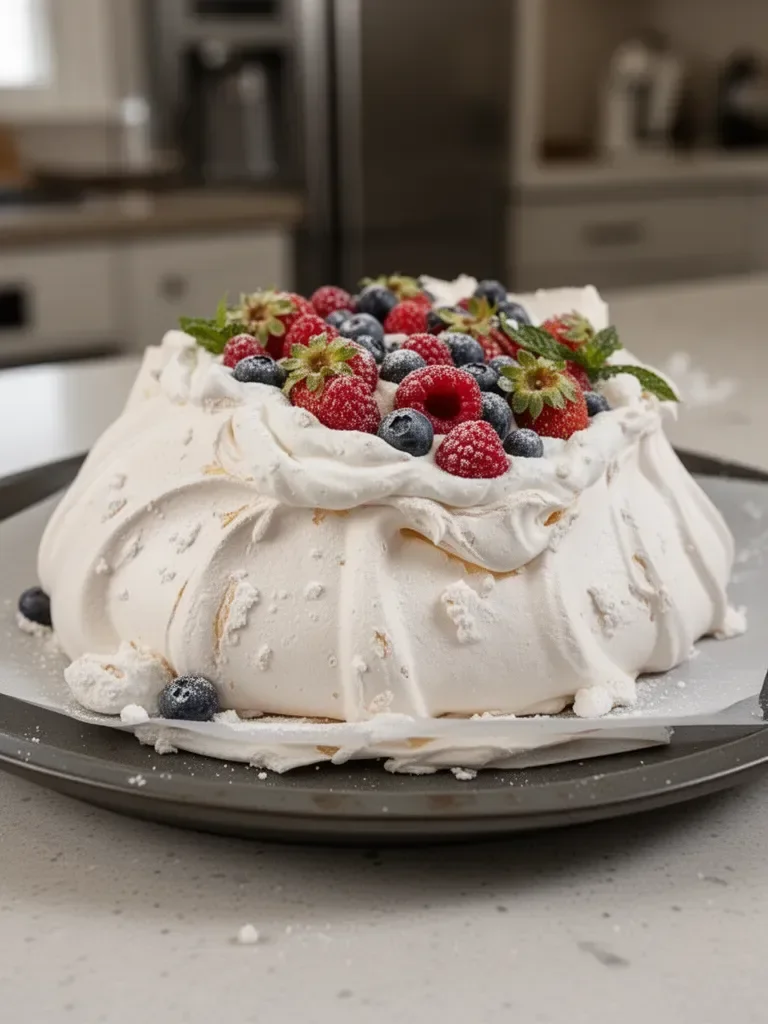
To perfect your pavlova, focus on achieving that perfect balance between the outer crisp shell and the soft, marshmallowy interior. The cooling process in the oven is essential; it allows the meringue to set without overheating, reducing the risk of cracks.
The final appearance should be a beautifully browned exterior with a slight sheen, indicative of the sugar’s caramelization. Perfect pavlova should also easily detach from the parchment without sticking, further showcasing a successful baking process.
Troubleshooting/variations
If your pavlova shows signs of cracking, this often points to rapid temperature changes. Avoid opening the oven door during cooking, and allow it to cool slowly within the oven.
For variations, consider infusing flavors into your pavlova by adding citrus zest or almond extract to the egg whites before whisking. Delicately folding in crushed nuts can also add texture and flavor, offering a delightful twist to the classic recipe.
Best Pavlova Recipe: Serving and Presentation
Serving/presentation
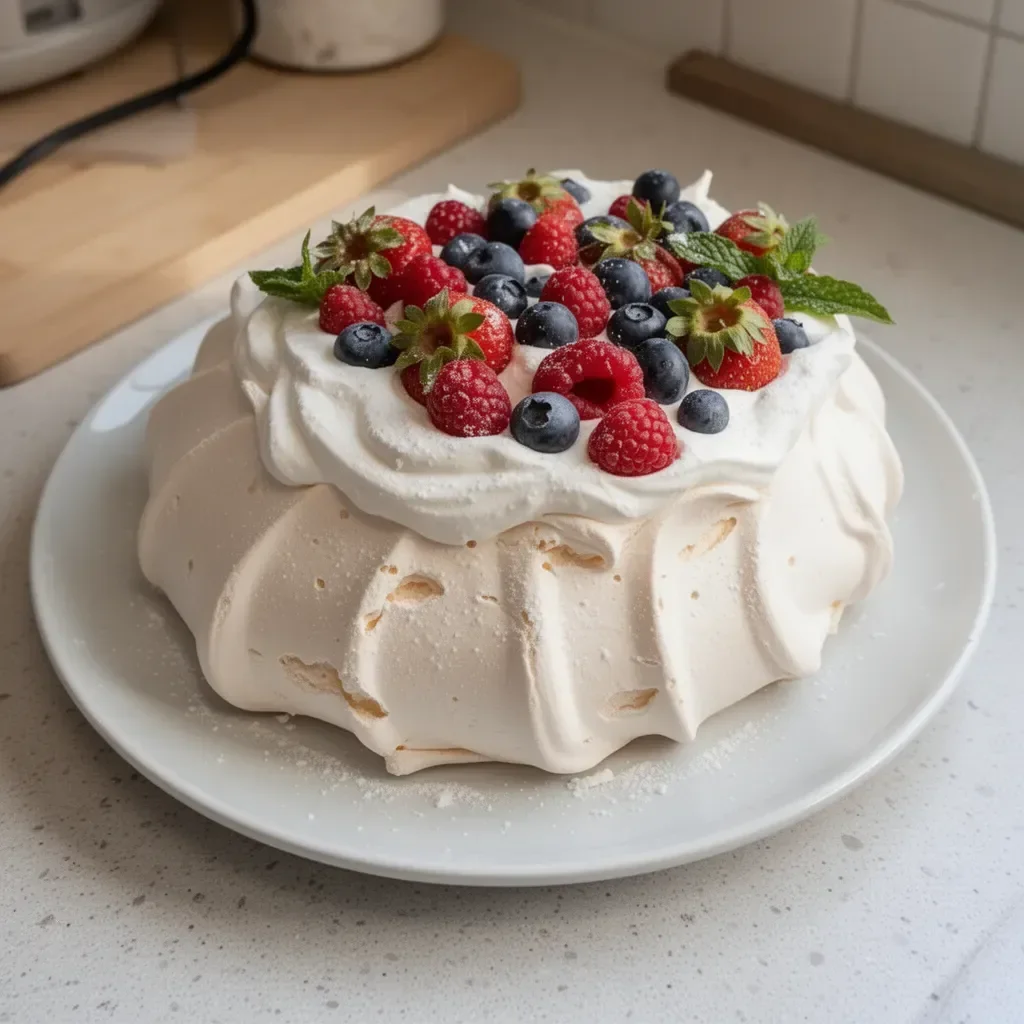
Serving pavlova is where you can truly let your creativity shine. Once the pavlova cools, whip the cream until you achieve soft peaks, then gently spoon it into the center of the pavlova.
Top with an array of fresh berries like strawberries, blueberries, or raspberries for a vibrant and inviting presentation. The tartness of the berries pairs beautifully with the sweetness of the pavlova, creating a harmonious balance.
Pairings/storage
While pavlova shines on its own, it complements light, fruity desserts or a simple bowl of fresh fruit. Store leftovers by placing them in an airtight container at room temperature, ensuring the pavlova retains its crispness. Avoid refrigerating, as this can introduce moisture and affect the texture.
In summary, making the best pavlova involves understanding the ingredient chemistry, perfecting your technique, and having fun with presentation. Enjoy crafting this delightful dessert, and watch it become a star at your table.
Pavlova remains a beloved dessert in many cultures, celebrated for both its simplicity and elegance. With the right approach, creating this classic treat at home can be an enjoyable and rewarding experience.
Print
Best Pavlova Recipe
- Prep Time: 15 minutes
- Cook Time: 75 minutes
- Total Time: 90 minutes
- Yield: 8 servings
- Category: Dessert
- Method: Baking
- Cuisine: Classic
- Diet: Vegetarian
Description
A delightful meringue-based dessert with a crisp shell and soft interior, perfect for serving with fresh berries.
Ingredients
- 6 egg whites (at room temperature)
- 1 1/2 cups granulated sugar
- Pinch of salt
- 3 tsp cornflour
- 1 tsp white vinegar
- 1 tsp vanilla essence
- 1 cup cream (for whipping)
- Fresh strawberries or other berries (for serving)
Instructions
- Preheat the oven to 300°F (150°C).
- Soak a paper towel in white vinegar, wipe down your mixing bowl and whisk attachment, then discard the paper towel.
- Whisk egg whites and a pinch of salt until stiff peaks form.
- Gradually add sugar, about 1/4 cup at a time, whisking after each addition for about a minute until the sugar dissolves.
- After incorporating all sugar, whisk on high for three minutes until thick and glossy.
- Combine cornflour, vinegar, and vanilla essence in a small bowl, then add to the meringue and whisk until just combined.
- Line a 12-inch round pizza tray with parchment paper.
- Scoop meringue onto the tray, forming a circle about 8-9 inches in diameter.
- Shape the pavlova using a spatula to create neat lines.
- Lower the oven temperature to 250°F (120°C) and place the pavlova in the oven.
- Bake for 1 to 1 hour and 15 minutes until lightly browned and dry to the touch.
- Turn off the oven and leave the pavlova inside for three hours to cool completely.
Notes
Use room-temperature egg whites for best results. Avoid making pavlova on humid days.