
📑 Table of Contents ▶
- The Fundamentals of Anti-Inflammatory Turmeric Chicken Soup
- Fundamentals
- Preparation/setup
- Directions
- Cooking Techniques for Anti-Inflammatory Turmeric Chicken Soup
- Technique
- Tips/tricks
- Perfecting the Results of Anti-Inflammatory Turmeric Chicken Soup
- Perfecting results
- Troubleshooting/variations
- Serving Anti-Inflammatory Turmeric Chicken Soup
- Serving/presentation
- Pairings/storage
- Conclusion
Anti-Inflammatory Turmeric Chicken Soup
Bringing comfort through a warm bowl of soup feels like a hug in a dish. Anti-inflammatory turmeric chicken soup has always held a special place in my heart. I remember cold, rainy afternoons when nothing could lift the spirits quite like a steaming bowl of this golden elixir. The aroma of sautéed veggies mixed with turmeric and ginger would fill the house, creating an inviting atmosphere that drew my family together around the dinner table.
Making this soup became a beloved ritual. The vibrant colors of the leeks, carrots, and celery danced in the pot, while the chicken and coconut milk mingled to create a sweet and savory base. It’s more than just a meal; it embodies healing and warmth, especially when feeling under the weather. With its anti-inflammatory properties, each spoonful feels like a nurturing embrace, bringing comfort and nourishment.
Crafting a pot of anti-inflammatory turmeric chicken soup requires minimal effort. It transforms simple ingredients into a flavorful, wholesome experience. Whether you’re looking to soothe a sore throat or just want to enjoy a delicious bowl of goodness, this soup certainly does the trick.
The Fundamentals of Anti-Inflammatory Turmeric Chicken Soup
Fundamentals
Anti-inflammatory turmeric chicken soup melds flavors beautifully while offering health benefits. Turmeric, the star here, boasts powerful anti-inflammatory properties thanks to its compound curcumin. When combined with ginger and garlic, this soup becomes a powerhouse of goodness. Each ingredient in this soup serves a purpose, creating a symphony of flavors.
The beauty of this recipe lies in its simplicity. Fresh vegetables like leeks, carrots, and celery meld together, forming a base that enhances the chicken’s flavor. The texture from the peas adds a delightful contrast. This soup works best when you utilize quality chicken broth, as it enriches the overall taste. Each element contributes to a warm, inviting bowl that calms the senses.
Preparation/setup
Preparing for anti-inflammatory turmeric chicken soup requires a few essential kitchen tools. A large pot or dutch oven will allow for sufficient space to sauté the vegetables and cook the chicken evenly. Prepare all your ingredients beforehand for an efficient cooking experience.
Start by slicing the leeks and chopping the onion, carrots, and celery. These vegetables infuse the broth with their flavors. Dicing the chicken breast into uniform pieces ensures even cooking. Keeping everything prepped means you move seamlessly through each step, maximizing flavor while saving time.
Ingredients
To make this delicious soup, you’ll need the following ingredients:
- 2 tablespoons olive oil
- 1 leek, sliced
- 1 onion, chopped
- 2 carrots, chopped
- 2 celery stalks, chopped
- 1 cup frozen peas
- 1 pound chicken breast, diced
- 4 cups chicken broth
- 1 can (14 oz) coconut milk
- 2 teaspoons ground turmeric
- 1 teaspoon garlic powder
- 1 teaspoon ginger powder
- Salt and pepper to taste
- Fresh herbs for garnish (optional)
Directions
- In a large pot, heat the olive oil over medium heat.
- Add the sliced leeks, chopped onions, carrots, and celery to the pot. Sauté until they soften.
- Stir in the diced chicken and cook until it turns golden brown.
- Pour in the chicken broth and coconut milk. Add the turmeric, garlic powder, ginger powder, salt, and pepper.
- Bring the mixture to a simmer. Cover the pot and let it cook for about 20 minutes.
- Stir in the frozen peas and cook for an additional 5 minutes.
- Adjust the seasoning as needed. Garnish with fresh herbs for presentation before serving.
Cooking Techniques for Anti-Inflammatory Turmeric Chicken Soup
Technique
Mastering the cooking technique for anti-inflammatory turmeric chicken soup enhances both flavor and texture. Start with the right heat settings; medium heat allows the vegetables to release their flavors without burning. Sautéing should create a vibrant visual blend, where colors come alive with each stir.
Stir the chicken pieces thoroughly during cooking to ensure even browning. This browning not only elevates flavor through caramelization but also brings a depth that enhances the soup’s overall taste. When adding the liquid, allow the flavors to meld through simmering—this step is essential in developing a rich flavor profile.
Tips/tricks
To elevate the soup even further, consider these tips and tricks. Fresh herbs, such as cilantro or parsley, can significantly boost the freshness of the final dish. Adding them towards the end of cooking maintains their bright flavor, enhancing your soup’s aroma.
Experiment with the spices. Adjusting the amounts of turmeric, garlic powder, or ginger powder can tailor the dish perfectly to your taste preferences. A touch of chili powder can introduce warmth if you enjoy a little kick.
Using shredded chicken instead of diced chicken can change the texture and make for an easy-to-eat dish. Similarly, substituting fresh peas for frozen can lend a different sweetness; just add them according to your cooking time.
Perfecting the Results of Anti-Inflammatory Turmeric Chicken Soup
Perfecting results
Perfecting anti-inflammatory turmeric chicken soup involves careful attention to detail during preparation and cooking. Achieving a harmonious balance of flavors comes with practice. Taste as you go, adjusting seasoning until it feels just right.
While this recipe is comforting as is, feel free to make variations that suit your preferences. Incorporating leafy greens like spinach or kale adds nutritional value and a boost of color. Cooking them for a few minutes right before serving keeps them vibrant.
A thicker consistency may appeal to some; simply let the soup simmer longer until it reduces. Alternatively, blending part of the soup using an immersion blender creates a creamier texture while keeping some chunky elements intact.
Troubleshooting/variations
In case you encounter any challenges, there are simple fixes to enhance your soup. If it tastes bland, explore adding an acid. A squeeze of lemon juice right before serving awakens all the flavors.
Conversely, if the soup feels too salty, introducing a peeled potato while simmering absorbs excess salt. Remember to remove it before serving.
In terms of variations, feel free to swap out the chicken with other proteins, such as diced tofu or chickpeas, if looking for a vegetarian alternative. The base remains elementary—maintaining the cooking method ensures delicious results.
Serving Anti-Inflammatory Turmeric Chicken Soup
Serving/presentation
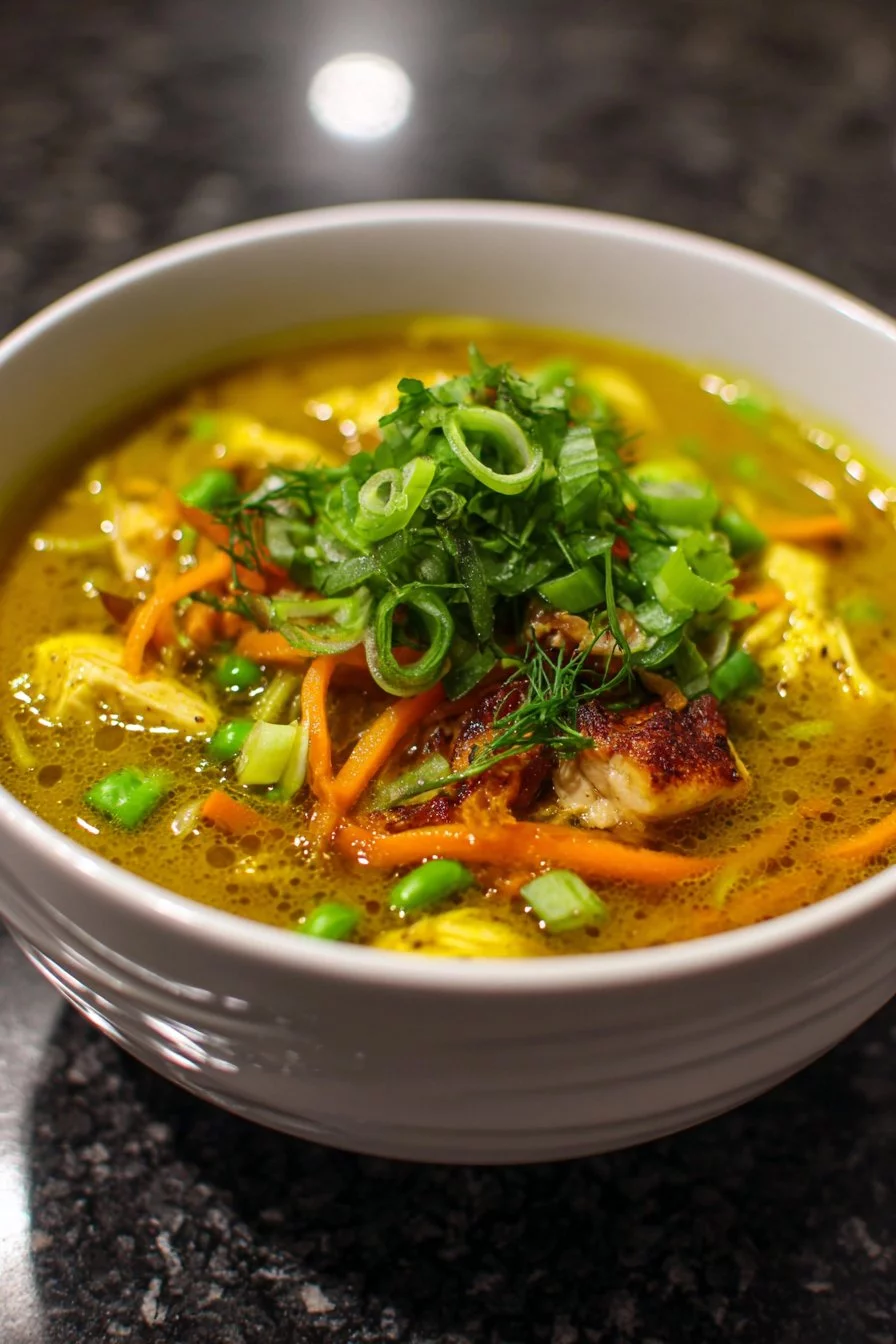
Serving anti-inflammatory turmeric chicken soup beautifully elevates the experience. Ladle the warm soup into bowls, allowing diagonal cuts of crusty bread on the side for dipping. A sprinkle of fresh herbs on top instantly brightens the dish.
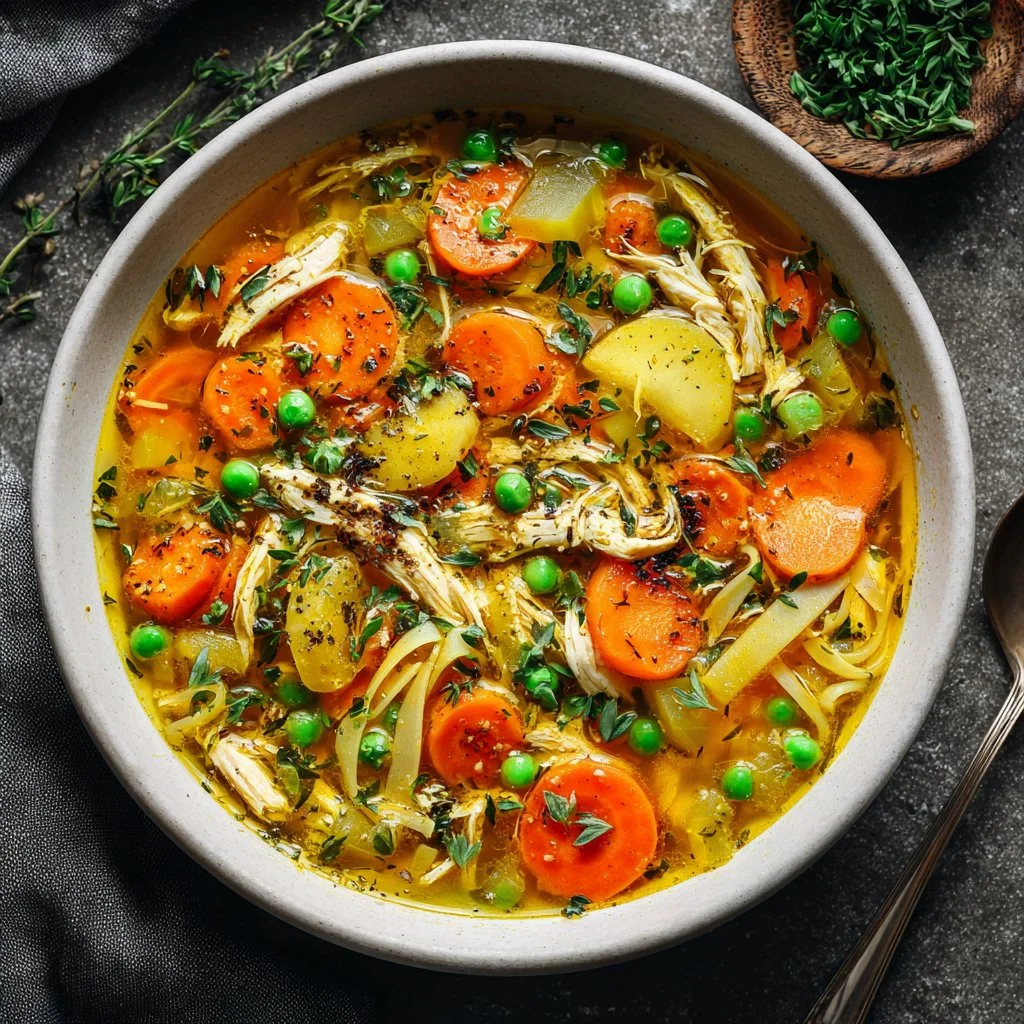
Consider using a colorful bowl to highlight the vibrant colors within the soup. The deep golden hue from the turmeric combined with the greens of the peas and herbs creates an appealing visual contrast.
Pairings/storage
Pair anti-inflammatory turmeric chicken soup with a light, crisp salad for a well-rounded meal. A simple side salad with vinaigrette accentuates the soup’s flavors without overwhelming them.
For storage, keep the soup in an airtight container in the refrigerator for up to three days. Reheat gently on the stovetop, adding a splash of chicken broth or coconut milk if it thickens during storage. Freezing the soup is also a viable option, extending its life and making it convenient for weeknight dinners.
Conclusion
Creating anti-inflammatory turmeric chicken soup transforms simple ingredients into a revitalizing meal. Each step in the process leads to a comforting dish that nourishes the body and soul. From carefully selecting your spices to the final touches with fresh herbs, this soup embodies warmth and healing. Enjoying it brings family together, fostering a sense of belonging and comfort on busy nights.
Print
Anti-Inflammatory Turmeric Chicken Soup
- Prep Time: 15 minutes
- Cook Time: 30 minutes
- Total Time: 45 minutes
- Yield: 4 servings
- Category: Soup
- Method: Stovetop
- Cuisine: American
- Diet: Gluten-Free, Dairy-Free
Description
A comforting and nourishing chicken soup packed with anti-inflammatory ingredients like turmeric and ginger, perfect for chilly days.
Ingredients
- 2 tablespoons olive oil
- 1 leek, sliced
- 1 onion, chopped
- 2 carrots, chopped
- 2 celery stalks, chopped
- 1 cup frozen peas
- 1 pound chicken breast, diced
- 4 cups chicken broth
- 1 can (14 oz) coconut milk
- 2 teaspoons ground turmeric
- 1 teaspoon garlic powder
- 1 teaspoon ginger powder
- Salt and pepper to taste
- Fresh herbs for garnish (optional)
Instructions
- In a large pot, heat the olive oil over medium heat.
- Add the sliced leeks, chopped onions, carrots, and celery to the pot. Sauté until they soften.
- Stir in the diced chicken and cook until it turns golden brown.
- Pour in the chicken broth and coconut milk. Add the turmeric, garlic powder, ginger powder, salt, and pepper.
- Bring the mixture to a simmer. Cover the pot and let it cook for about 20 minutes.
- Stir in the frozen peas and cook for an additional 5 minutes.
- Adjust the seasoning as needed. Garnish with fresh herbs for presentation before serving.
Notes
For added freshness, consider topping with cilantro or parsley just before serving. You can also incorporate leafy greens for extra nutrition.