
📑 Table of Contents ▶
- Thai Peanut Curry Recipe
- Thai Peanut Curry: A Flavorful Delight
- Fundamentals
- Preparation/setup
- Directions
- Crafting the Perfect Thai Peanut Curry
- Technique
- Tips/tricks
- Ensuring Right Results with Thai Peanut Curry
- Perfecting Results
- Troubleshooting/variations
- Serving and Storing Thai Peanut Curry
- Serving/presentation
- Pairings/storage
- More recipes you may like
Thai Peanut Curry Recipe
The first time I tried Thai peanut curry, I experienced a burst of flavors that made my taste buds dance. The creamy richness of the coconut milk combined with the sweetness of peanut butter and the spicy kick of red curry paste created a symphony of flavors. Each bite transported me to a bustling street market in Thailand, where vibrant colors and appetizing scents filled the air.
As I learned to recreate this delightful dish, I discovered that it beautifully adapts to what’s available in the pantry. A simple set of ingredients can transform into a heartwarming meal that families gather around. The versatility of Thai peanut curry allows for endless variations, yet my go-to recipe remains tried and true, highlighting essential ingredients like chicken, carrots, and potatoes.
Perfect for busy weeknights, this Thai peanut curry recipe combines convenience with robust flavors. It quickly fills the kitchen with a mouthwatering aroma, inviting everyone to join in for dinner. With just a handful of ingredients, you too can create this delicious meal that’s sure to satisfy.
Thai Peanut Curry: A Flavorful Delight
Fundamentals
Thai peanut curry stands out not only for its vibrant flavors but also for its simple preparation. This dish centers around a harmonious blend of ingredients, each contributing unique elements to the overall experience. The combination of coconut milk and peanut butter results in a creamy, dreamy sauce that perfectly coats succulent pieces of chicken and tender veggies.
Understanding the fundamentals of Thai peanut curry starts with choosing the right ingredients. Opt for fresh vegetables, as they enhance the dish’s texture and flavor. Carrots add sweetness, while potatoes bring a comforting heartiness. Chicken breasts offer a tender protein base that’s juicy and satisfying.
Preparation/setup
Preparing your Thai peanut curry involves a few simple steps. Start by gathering and prepping all your ingredients. Chop the onions, carrots, and potatoes into bite-sized pieces, and cube the chicken breasts. This ensures even cooking and allows all the flavors to unfold harmoniously.
Next, heat your oil in a large skillet or pot over medium-high heat. Once hot, sauté the onions, carrots, and potatoes for about 4-5 minutes. This step is vital, as it brings out the natural sweetness of the vegetables and lays the foundation for your curry.
Ingredients
Vegetables:
- 2 carrots, cut into bite-sized pieces
- 2 medium potatoes, cut into bite-sized pieces
- 1/2 yellow onion, diced
Protein:
- 2 chicken breasts, cubed
Oils:
- 2 Tbsp. olive oil (coconut or vegetable oil can also be used)
Flavorings:
- 2 tsp. ground ginger
- 2 tsp. minced garlic
- 1 – 4oz. jar of red curry paste
Sauce Components:
- 2 cans coconut milk
- 1/4 cup + 2 Tbsp. peanut butter
- 5 Tbsp. brown sugar
- 4 tsp. soy sauce
- Juice from 1 lime
Directions
- In a large skillet or pot, heat the oil over medium-high heat.
- Add the diced onions, chopped carrots, and chopped potatoes. Sauté for 4-5 minutes until the vegetables start to soften.
- Next, add the cubed chicken, ground ginger, minced garlic, and red curry paste. Mix well to combine, and sauté for another couple of minutes.
- Stir in the coconut milk, allowing the mixture to meld together beautifully.
- Simmer over medium-low heat for 10 minutes, or until the carrots and potatoes become tender.
- Stir in the peanut butter, brown sugar, soy sauce, and lime juice. Cook for an additional 4-5 minutes to allow the flavors to deepen.
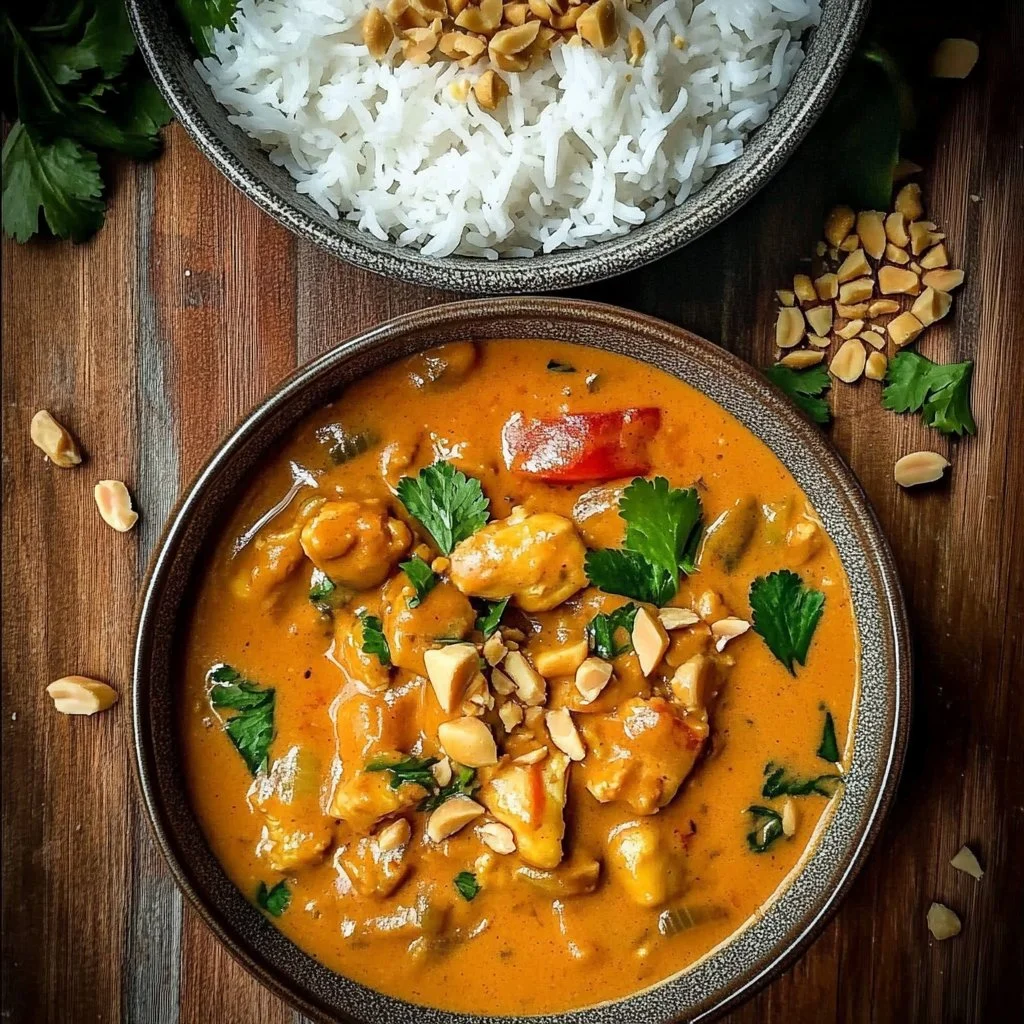
- Serve over rice, garnished with chopped peanuts for added crunch.
Crafting the Perfect Thai Peanut Curry
Technique
The key to mastering Thai peanut curry lies in understanding the technique behind each step. Start with high heat to sauté the vegetables, allowing them to caramelize slightly. This enhances their natural sweetness, creating a flavorful base.
Incorporate the chicken, ensuring it browns slightly before adding the coconut milk. This step locks in flavor and adds depth to the dish. Timing is crucial; simmering allows the carrots and potatoes to become tender while the flavors meld perfectly.
Tips/tricks
- For an extra kick, consider adding a dash of lime zest or a pinch of red pepper flakes during the cooking process.
- If you prefer a vegetarian option, replace the chicken with tofu or chickpeas.
- Adjust the amount of red curry paste based on your heat preference; more paste results in a spicier dish, while less keeps it mild.
- Always taste your curry before serving. You can tweak sweetness or saltiness by adding more brown sugar or soy sauce as needed.
Ensuring Right Results with Thai Peanut Curry
Perfecting Results
Achieving the perfect Thai peanut curry requires practice and a few tweaks along the way. Pay attention to the cooking times; overcooking the vegetables can lead to a mushy texture. Aim for a slight crunch in the carrots and potatoes to enhance the overall mouthfeel.
Balance is crucial in this recipe. If the curry tastes too sweet, a splash of lime juice can brighten the flavors. Conversely, if it’s too tangy, more peanut butter can help smooth it out.
Troubleshooting/variations
If your Thai peanut curry seems too thick, thin it out with a splash of water or more coconut milk. This keeps the sauce creamy but ensures it coats your rice beautifully without overwhelming it.
Feel free to experiment with vegetables. Bell peppers, snap peas, or bok choy can add new textures and flavors. For a nutty twist, use cashew butter instead of peanut butter. Each variation can create a distinct profile worth trying.
Serving and Storing Thai Peanut Curry
Serving/presentation
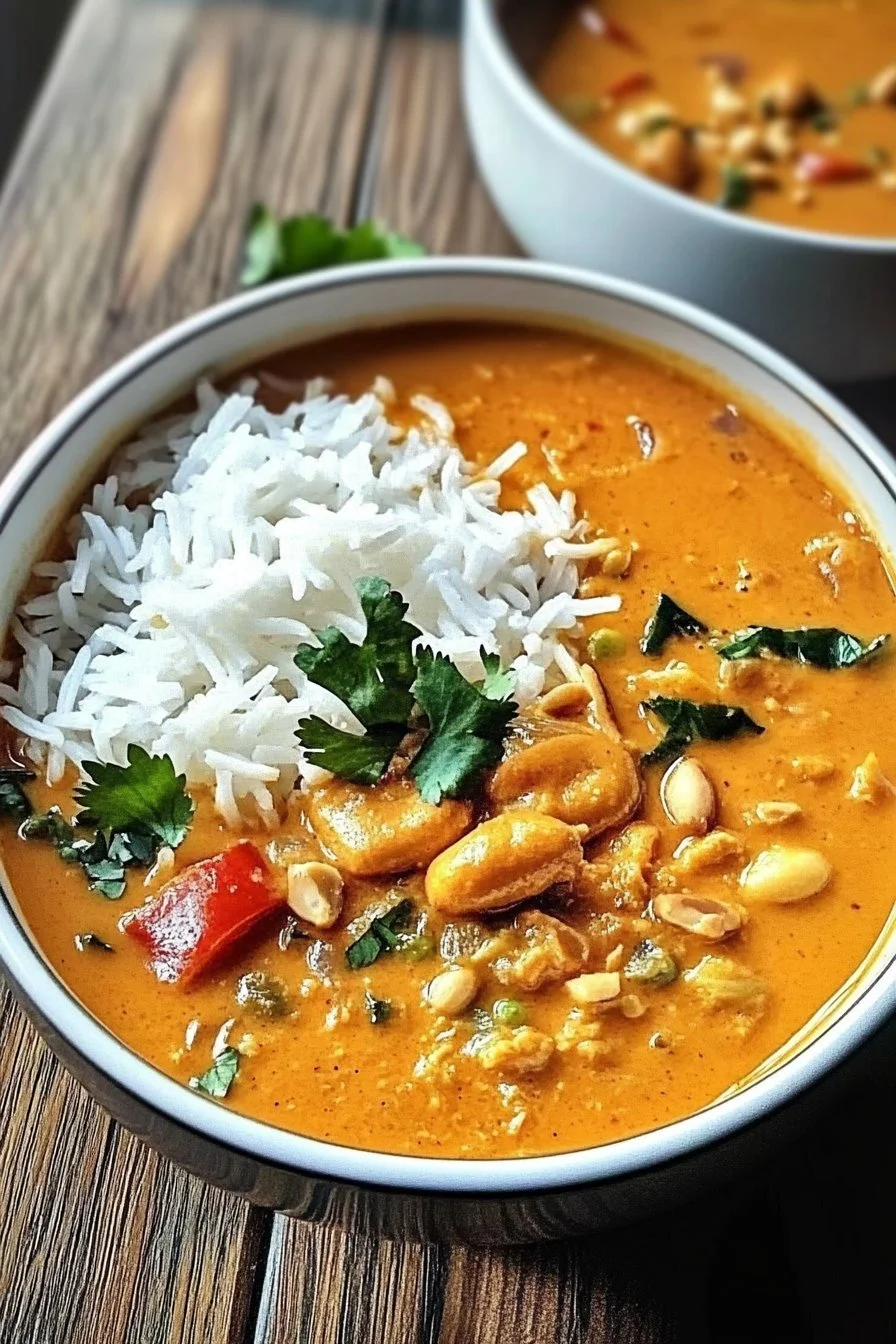
Serving Thai peanut curry can be as straightforward or as elaborate as you like. Ladle the fragrant curry over a generous helping of rice, whether jasmine, white, or brown. This hearty base complements the rich sauce perfectly.
To elevate the presentation, sprinkle freshly chopped cilantro or slice green onions for a pop of color. Garnishing with chopped peanuts not only adds a delightful crunch but also enhances the overall look.
Pairings/storage
Enjoy the curry as a standalone meal or pair it with a side of crisp green salad. The refreshingly light salad will counterbalance the curry’s richness.
For storage, keep leftovers in an airtight container in the refrigerator for up to 3 days. Reheat gently on the stovetop, adding a touch of water if necessary to restore creaminess. While reheating, test for seasoning, and adjust as needed.
This delightful Thai peanut curry recipe will undoubtedly become a favorite in your home, combining comfort food with a touch of exotic flair.
Print
Thai Peanut Curry
- Prep Time: 15 minutes
- Cook Time: 30 minutes
- Total Time: 45 minutes
- Yield: 4 servings
- Category: Main Course
- Method: Stovetop
- Cuisine: Thai
- Diet: Gluten-Free
Description
A creamy and flavorful Thai peanut curry made with chicken, vegetables, and a rich sauce of coconut milk and peanut butter.
Ingredients
- 2 carrots, cut into bite-sized pieces
- 2 medium potatoes, cut into bite-sized pieces
- 1/2 yellow onion, diced
- 2 chicken breasts, cubed
- 2 Tbsp. olive oil
- 2 tsp. ground ginger
- 2 tsp. minced garlic
- 1 jar (4oz.) red curry paste
- 2 cans coconut milk
- 1/4 cup + 2 Tbsp. peanut butter
- 5 Tbsp. brown sugar
- 4 tsp. soy sauce
- Juice from 1 lime
Instructions
- In a large skillet or pot, heat the oil over medium-high heat.
- Add the diced onions, chopped carrots, and chopped potatoes. Sauté for 4-5 minutes until the vegetables start to soften.
- Next, add the cubed chicken, ground ginger, minced garlic, and red curry paste. Mix well to combine, and sauté for another couple of minutes.
- Stir in the coconut milk, allowing the mixture to meld together beautifully.
- Simmer over medium-low heat for 10 minutes, or until the carrots and potatoes become tender.
- Stir in the peanut butter, brown sugar, soy sauce, and lime juice. Cook for an additional 4-5 minutes to allow the flavors to deepen.
- Serve over rice, garnished with chopped peanuts for added crunch.
Notes
For extra heat, add lime zest or red pepper flakes. You can also substitute chicken with tofu or chickpeas for a vegetarian version. Taste and adjust sweetness or saltiness as needed.